
Seasonal Challenges Faced by E-commerce Warehouses
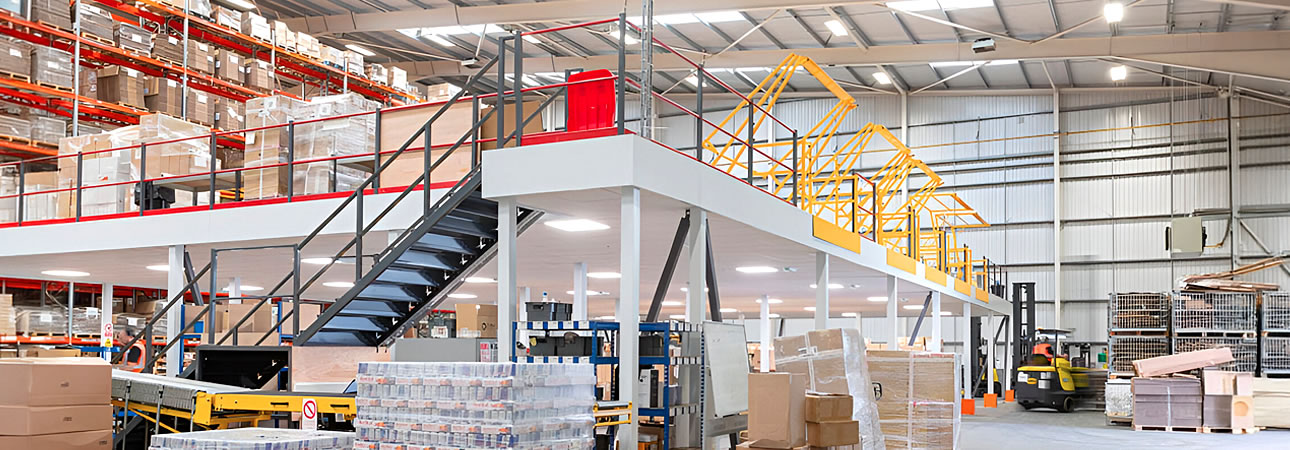
Poor management can lead to a range of issues, and ultimately dissatisfied customers. Some of the main challenges and issues faced by e-commerce warehouse operators due to seasonality include:
-
Overstocking risk: Leading to crowded aisles and inefficient picking routes.
-
Understocking risk: Resulting in lost sales opportunities.
-
Inventory obsolescence: Seasonal products lose value rapidly post-season.
-
Returns spike: Post-season returns significantly strain storage and operations.
-
Increased stock volume: Requiring more storage and more efficient space use.
- Complex picking and packing demands: Due to higher order volumes and a wider variety of SKUs.
Addressing Seasonal Challenges
Key solutions to managing these challenges are efficient space optimisation, to be able to accommodate and process higher volumes of goods, and achieving flexibility in warehouse layouts so that workflows can adjust to meet seasonal demand.
Other important solutions to managing seasonal requirements within e-commerce warehouses include using technology and automation, and being able to handle returns efficiently.
Let’s take a look at these solutions in more detail.
Efficient Space Optimisation in E-Commerce Warehousing
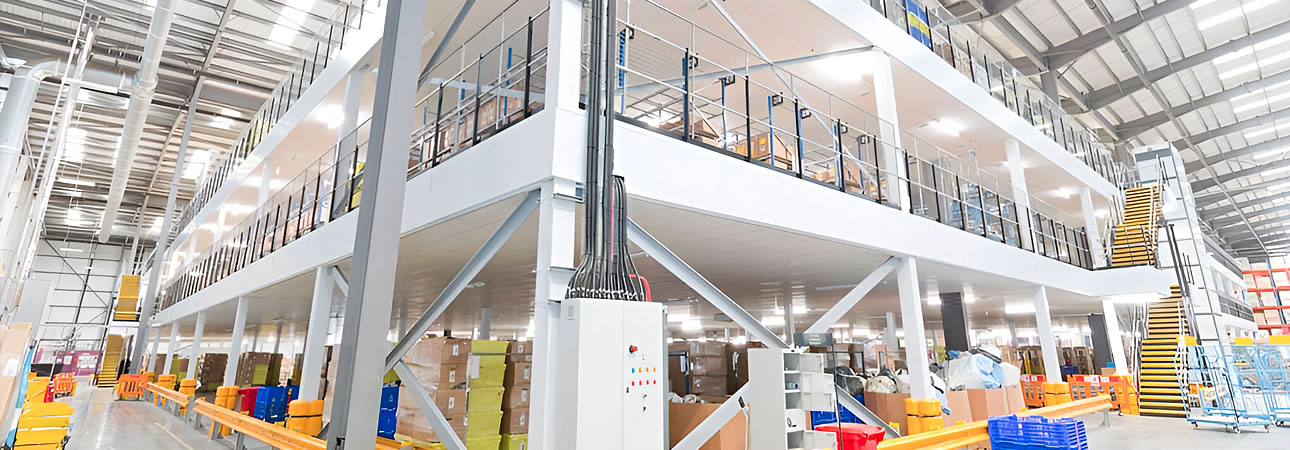
With surges in seasonal inventory, stock can quickly start piling up. This means that every inch of warehouse space counts. The good news is that today there are more smart ways than ever to squeeze maximum value out of the space available within a warehouse.
From large fulfilment centres that need to process goods as efficiently as possible, to last mile delivery facilities with unique requirements for depositing and retrieving items, high density storage and tailored workflow solutions ensure high demand can be accommodated with ease.
Making The Most of Vertical Space
Vertical space is one of the most underutilised assets in many e-commerce warehouses, and maximising it can unlock significant additional storage capacity without expanding the warehouse footprint. Vertical expansion reduces floor congestion and maximises cubic storage capacity, keeping picking paths clear and efficient.
High-Bay Racking Systems
High-bay racking structures extend upward to take full advantage of the building's vertical space, often reaching heights of 10 metres (30 feet) or more. These systems typically use selective pallet racking or very narrow aisle (VNA) racking, accessed by specialised high-reach trucks or automated systems.
- Maximises cubic storage capacity without expanding the warehouse footprint.
- Enables inventory to be organised by storage level based on picking frequency and SKU velocity.
- Reduces congestion on the warehouse floor, improving picking efficiency.
Mezzanine Flooring
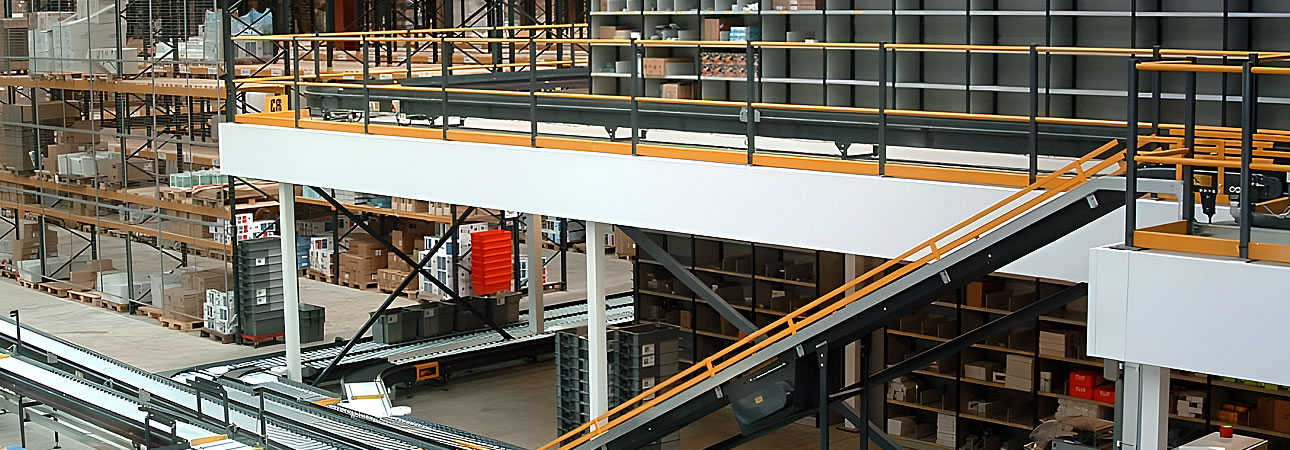
Another effective way to maximise vertical space is by installing mezzanine floors. These intermediate floors built between the existing floor and ceiling create additional usable levels within the same footprint. Warehouse mezzanines can be used for a variety of purposes, including additional storage areas.
- Increases usable floor space for storage without requiring external expansion.
- Cost-effective compared to relocating or enlarging a warehouse.
- Customisable and modular, with the option to extend based on changing needs.
- Quick to install, making them an excellent solution for preparing for seasonal peaks.
Increasing Storage Density
Maximising warehouse capacity isn’t just about building upwards. It's also about increasing how efficiently goods are stored and accessed at all levels. Depending on the types of goods being stored, there are various racking and layout solutions that can significantly improve storage density without major structural changes.
Very Narrow Aisle (VNA) Racking
Very Narrow Aisle (VNA) racking systems reduce aisle widths to as little as 1.5 to 2 metres, compared to 3 to 4 metres in standard warehouses. Specialised turret trucks or articulated forklifts are used for picking. VNA racking can be an excellent way to get more storage capacity from a defined floor area, particularly when used in a high-bay configuration.
-
Greatly increases storage density while maintaining full accessibility to every pallet.
-
Suitable for high-SKU environments where selective access to individual pallets is necessary.
-
A good solution for operations looking to strike a balance between density and flexibility.
Drive-In and Drive-Through Racking
Drive-in racking and drive-through systems are designed for storing large volumes of similar items with minimal access aisles. Drive-in racking operates on a Last In, First Out (LIFO) basis, where forklifts drive directly into storage lanes. Drive-through racking allows access from both ends, enabling First In, First Out (FIFO) inventory flow.
-
Significantly higher storage density compared to standard selective racking.
-
Ideal for seasonal bulk goods or products with longer shelf lives.
-
Reduces the number of aisles needed, freeing up valuable floor space.
Flexible Racking & Shelving Systems
Flexible warehouse storage systems are designed to adjust quickly to changes in inventory size, type, and volume. This makes them ideal for dynamic e-commerce environments where storage needs shift dramatically throughout the year, and a great tool for achieving high levels of storage efficiency.
Adjustable Racking Systems
Adjustable pallet racking (APR) allows beam heights and shelving levels to be repositioned as needed, providing flexibility for storing products of different shapes and sizes. This is especially useful during seasonal transitions when warehouse layouts may need to accommodate different types or quantities of goods, or unusually large or bulky stock.
-
Quick reconfiguration of shelving heights to suit different pallet sizes or product dimensions.
-
Low-cost adaptability without the need for structural changes.
-
Compatible with standard forklifts and existing storage infrastructure.
Mobile Shelving Units
Mobile shelving systems are mounted on rolling carriages, allowing units to slide together and eliminate unused aisle space. These are ideal for small-item storage, returns handling, or seasonal SKU overflow areas.
- Maximises floor space by reducing the number of fixed aisles.
- Improves pick density as more SKUs can be stored in a smaller footprint.
- Can be easily reconfigured or relocated as storage zones evolve.
Boltless Shelving and Modular Units
For fast-paced e-commerce operations with constantly shifting inventory types, boltless shelving and clip-together modular units offer lightweight, easy-to-install storage that can be changed at short notice.
- Ideal for temporary or seasonal product zones.
- Easy to relocate or dismantle between peak periods.
- Popular in fulfilment and packing zones for pick bins, accessories, and small-item staging.
Enhancing Flexibility in Warehouse Layouts
In modern e-commerce environments, flexibility in the way space is used can be just as important as capacity. As seasonal peaks come and go, the ability to quickly reconfigure a warehouse layout can dramatically improve operational efficiency. Flexible layouts allow warehouse operators to adapt work zones, storage areas, and packing processes quickly, without the costs or downtime associated with permanent structural changes.
Warehouse Partitioning Systems
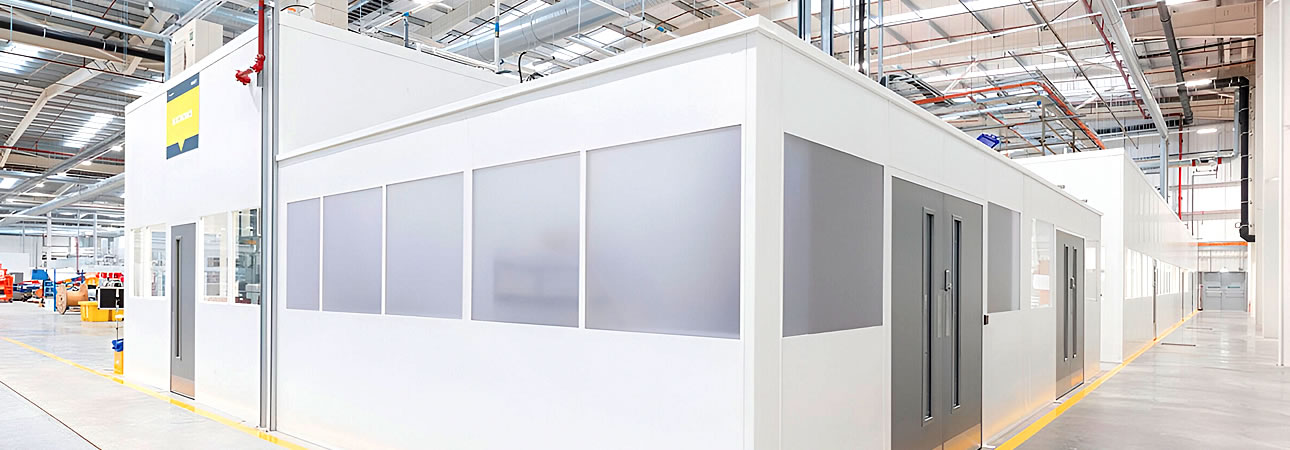
Modular steel partition systems are one of the most valuable solutions for providing flexibility as to how space is used in a warehouse. They use strong yet demountable wall panels to create or reshape functional zones within the warehouse, such as separating storage from packing, creating areas for robotics, or isolating returns processing during high-volume periods.
- Allow control over zoning to define clear boundaries between different functions (e.g. inbound, outbound, QC, returns).
- Help reduce noise and dust, making them valuable in operations where packing or light manufacturing occurs near storage.
- Can be installed on a temporary basis which is ideal for short-term needs like holiday order processing or flash sales.
Mezzanine Floors for Flexible Space Creation
While mezzanine floors are associated with maximising floor space, and in particular vertical storage efficiency, they also offer exceptional flexibility in warehouse layout planning. Installing mezzanine floors enables businesses to create multi-purpose spaces that can adapt to changing operational demands.
- Multi-use flexibility with space that can be adapted seasonally, for example serving as extra packing stations during peak seasons and bulk storage zones during quieter months.
- Zoning without major construction allows businesses to create dedicated areas for seasonal promotions, quality control, or order preparation.
- Modular mezzanine systems can be installed as either long-term or short-term solutions depending on business needs.
- Serving as a platform for automation, AMR and AGV mezzanines enable robots to pick goods from high level storage and drop via chutes to be packed by personnel at ground level.
Mobile Workstations
Mobile workstations are wheeled, ergonomic workbenches equipped with features such as power, scanners, printers, and small storage. They allow staff to perform picking, packing, or QC tasks wherever needed, and can be used in conjunction with automated picked robots which can bring goods to personnel or carry goods to be shipped for improved efficiency in the workflow of the facility.
- Relocatable on demand, enabling stations to be shifted to match peak zone activity (e.g. repositioned closer to hot-pick zones).
- Improve workflow flexibility by enabling additional support for staff in areas that might not be part of the standard fixed layout.
- Reduce congestion and keep aisles clear by bringing the workstation closer to the work rather than moving products long distances.
Scalable Storage Solutions
Scalable storage solutions are modular systems, such as reconfigurable racking, multi-tiered warehouse shelving, or storage that can be adapted to accommodate different sized goods that can grow or shrink depending on stock levels.
- Supports dynamic stock levels, ideal for peak season expansions or new product launches.
- Minimal infrastructure changes required as additional storage can be integrated into existing racking systems or standalone zones.
- Facilitates cost-effective growth by enabling businesses to start small and add units as needed, avoiding large upfront costs.
How Technology & Automation Helps Manage Seasonal Demand
Over the last decade, technology and automation have had a significant impact on the warehousing industry and have been one of the key facilitators of growth in the e-commerce sector. Modern warehouses increasingly rely on intelligent systems and automation to keep up with demand while minimising manual intervention and operational disruption.
The latest systems now play a major role in enabling e-commerce businesses to scale and manage seasonal inventory efficiently. They help to optimise space usage, streamline operations, and maintain inventory accuracy, even during the most intense peak periods.
Warehouse Management Systems (WMS)
A Warehouse Management System (WMS) is the backbone of efficient warehouse operations, particularly during seasonal surges. It provides real-time visibility and control over stock, workflows, and space allocation.
A good WMS offers real-time inventory tracking that allows warehouse managers to monitor stock levels, item locations, and product movements instantly. Many systems feature dynamic slotting capabilities, automatically suggesting the best storage locations for incoming inventory based on SKU size, movement rates, and turnover velocity, all of which helps to maximise available storage space during busy periods.
Integration with order management systems ensures that picking, packing, and shipping workflows are tightly coordinated with inbound and outbound inventory flows, while robust reporting and analytics tools provide insights into space utilisation, picking efficiency, and stock turnover, enabling continuous operational improvements.
Mobile Robotics (AMRs and AGVs)
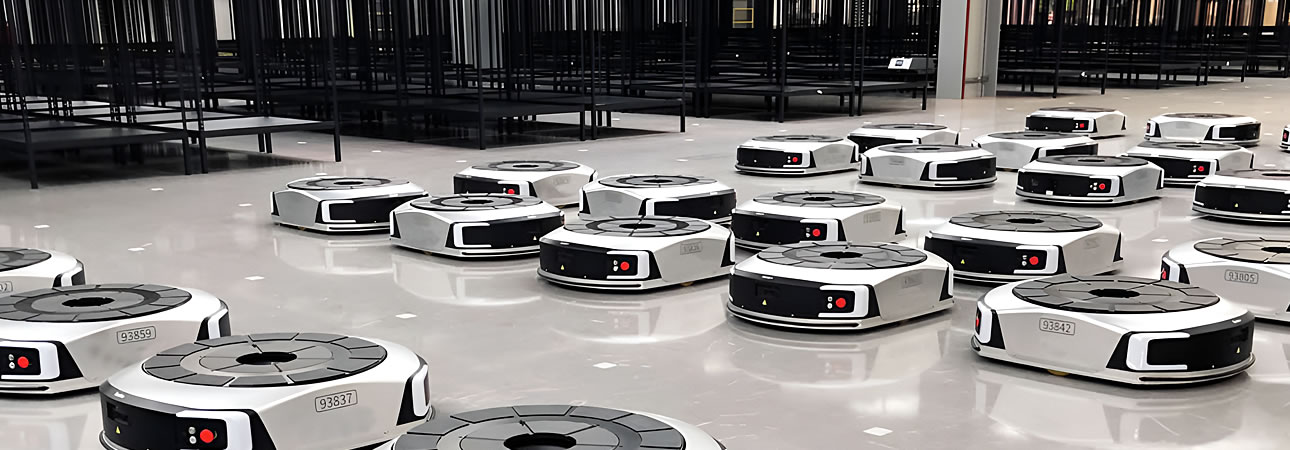
Autonomous Mobile Robots (AMRs) and Automated Guided Vehicles (AGVs) offer flexible automation options that are ideal for providing flexible, scalable automation during seasonal peaks.
AMRs can dynamically navigate changing warehouse layouts, such as newly created seasonal pick zones, while AGVs efficiently move inventory between areas, reducing the burden on human workers. Both solutions allow businesses to scale up handling capacity quickly during peaks and then redeploy or scale down the fleet once demand normalises.
With the use of robotic systems continuing to increase and expand in capability, it’s important that warehouses are designed to accommodate both current and future technology. Whether setting up a new warehouse or updating an existing facility, features such as robotic compatible flooring are becoming essentials for any e-commerce or logistics business.
Automated Storage and Retrieval Systems (AS/RS)
Automated Storage and Retrieval Systems (AS/RS) are ideally suited for managing large volumes of seasonal inventory because they maximise storage density while maintaining fast access to goods.
AS/RS systems use robotic cranes, shuttles, or carts operating within ultra-dense, high-bay racking to automatically store and retrieve goods. By bringing items directly to pickers, these systems eliminate the time and congestion caused by manual picking: a major advantage during seasonal rushes when speed and volume are critical. Integration with WMS ensures that seasonal SKUs are slotted and retrieved efficiently based on real-time order trends.
Smart Conveyor & Sorting Systems
Conveyor and sortation systems help manage seasonal order volume by moving goods automatically between different processing zones, preventing bottlenecks during high-traffic periods.
By automating the flow of goods, from picking to packing to dispatch, conveyors drastically reduce the manual transport burden on staff. Automated sortation systems direct parcels to the correct shipping lanes based on barcode scanning, helping warehouses meet tight seasonal delivery deadlines with high levels of accuracy.
Accommodating Seasonal Returns
In the e-commerce sector, managing returns efficiently is just as important as fulfilling outbound orders. It’s something that’s especially important to get right during and just after peak seasons such as Christmas, Black Friday, or major promotional events.
Seasonal spikes in returns can overwhelm unprepared warehouses, leading to stock inaccuracies, goods being lost or damaged, storage congestion, and delays in refund processing. All of which can harm customer satisfaction and the profitability of the business.
The right strategies for handling seasonal returns therefore play an important role in maintaining operational efficiency, warehouse space optimisation, and brand reputation during and after peak periods.
Returns Handling Process
The first thing to get right is the overall process of how returned items are managed. The process in e-commerce typically involves receiving, inspecting, restocking (or disposing of) returned goods, and updating inventory records. All while ensuring fast refunds or exchanges for customers.
During seasonal peaks, the volume of returns can increase by up to 30–50% compared to normal operations, particularly in sectors like apparel, electronics, and gifts.
Best Practices include:
- Using dedicated returns areas to enable returned goods to be processed efficiently.
- Pre-planning returns workflows before peak seasons to avoid chaos during the post-peak period.
- Standardising return receiving steps: visual inspection, categorisation (restock, refurbish, dispose), and immediate system updates.
- Allocating trained staff to returns zones to maintain speed and accuracy during returns surges.
Dedicated Returns Areas
Creating dedicated zones within the warehouse specifically for handling returns is essential to avoid cross-contamination with outbound inventory and to streamline reverse logistics. When planning a returns area within an e-commerce warehouse, some important factors to consider include:
- Separate physical space: Returns should not mix with ready-to-ship stock to prevent mispicks and confusion.
- Specialised racking or shelving: Use flexible, modular shelving units to store returns temporarily.
- Partitioned areas: Modular warehouse partitions or curtained-off sections can help isolate returns processing without major construction.
- Designated inspection stations: Equip returns areas with workbenches, scanners, and access to WMS terminals for fast processing.
A well configured returns area is important for any e-commerce warehouse, but particularly so during busy seasonal periods. It helps to speed up reprocessing which means restockable items can be quickly reintegrated into inventory, helping to sell them while demand is still high.
Tracking and Managing E-Commerce Returns
Accurate and timely tracking is another important part of managing seasonal e-commerce returns. As returned items arrive, they should be immediately logged into the WMS to reflect their updated status, whether restockable, damaged, or needing inspection. Assigning return categories helps streamline decision-making and prevents congestion in storage areas. This clarity ensures fast turnaround and improves overall inventory accuracy during high-volume return periods.
Efficient tracking also provides valuable insights. Return reasons, such as damage, incorrect item, or buyer’s remorse, can be captured and analysed to identify common issues with specific SKUs, packaging, or order handling. These analytics can then contribute towards better product decisions and process improvements for future peak seasons.