
Preparing Warehouses for Tomorrow's Technology
It’s no secret that the rapid evolution of warehouse technology is transforming the logistics landscape. Advanced systems such as automated robots, guided vehicles, and robotic picking and packing solutions are becoming indispensable tools for modern warehouses. While these technologies promise unmatched efficiency and accuracy, their success hinges on having the right infrastructure in place.
Components such as flooring, storage, and partitioning all ensure warehouses are equipped to handle today’s cutting-edge automation, while remaining adaptable for future advancements. A well-prepared warehouse isn’t just an operational advantage, it’s a necessity for staying competitive in an era of accelerated growth.
Automation Technologies Transforming Warehousing
Warehouses today are adopting a wide array of automation technologies to keep pace with the demands of modern logistics. The latest innovations enable faster, more accurate, and scalable processes.
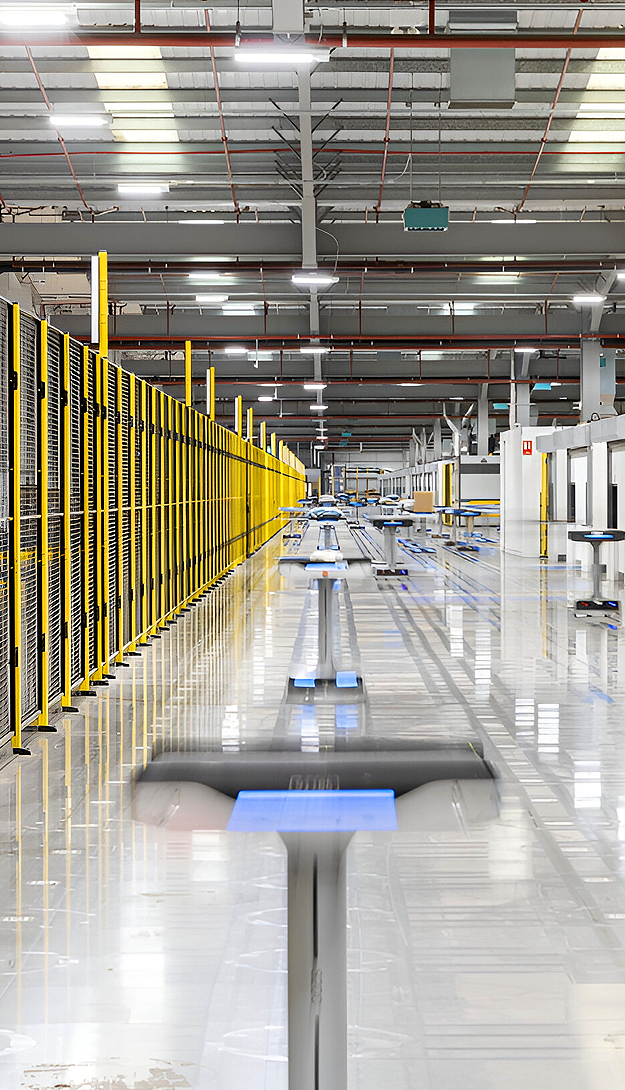
Autonomous Mobile Robots (AMRs) & Automated Guided Vehicles (AGVs)
Able to navigate complex layouts with precision, AMRs and AGVs are transforming the transports of goods in and around warehouses. These robotic systems retrieve, move, and deliver goods across storage and packing zones, significantly reducing manual handling time.
Picking Robots
Used for tasks such as order fulfillment, robotic picking systems are able to rapidly identify, pick, and sort items for shipment. These systems work in tandem with human operators, enhancing productivity and reducing picking errors in high-demand warehouse environments.
Goods-to-Person (GTP) Systems
These systems bring items or storage racks directly to human personnel, reducing travel time and improving picking efficiency. GTP solutions, often powered by AMRs or robotic shuttles, are particularly effective in high-volume e-commerce warehouses.
Automated Storage & Retrieval Systems (AS/RS)
High-density storage systems use automated cranes or shuttles to deposit and retrieve goods from vertical or horizontal racks. AS/RS maximise space utilisation, speed up workflows, and ensure accurate, real-time inventory management.
Collaborative Robots (Cobots)
Designed to work alongside humans, cobots assist with repetitive tasks such as sorting, packing, or lifting heavy items. Their adaptability and ease of integration make them ideal for augmenting manual labor in warehouses.
Vision Systems and AI for Quality Control
AI-powered cameras are increasingly used for quality assurance, scanning items for defects, errors, or misplacements during picking, packing, or shipping. This technology is valuable for its ability to minimise costly mistakes and enhance customer satisfaction.
Drones for Inventory Management
Equipped with RFID scanners or vision systems, drones are now being used to perform inventory checks in large warehouses, saving time and reducing reliance on manual processes.
Changing Trends in Warehousing
The logistics industry is experiencing a period of unprecedented change, driven by a range of factors including shifting consumer expectations, technological advancements, and the evolving demands of e-commerce. At Avanta, we offer tailored turnkey solutions that help our clients to capitalise on innovation, remain competitive, and improve efficiency.
E-commerce Growth
With the majority of UK shoppers now using e-commerce, the sector continues to surge, reshaping warehouse operations not just in the UK but around the world. Retailers and logistics providers are handling higher volumes of orders, with expectations for faster turnaround times. The shift from traditional retail to online shopping and the continuing evolution of digital channels has created new demands for efficiency at every stage of the supply chain.
-
Increased Order Volumes: The rise in online purchases has led to significant pressure on warehouses to process and ship orders more quickly. During peak seasons, order volumes can increase to double, triple or even higher levels compared to normal periods, requiring warehouses to be able to quickly scale operations to operate at maximum capacity.
-
Shorter Lead Times: Next-day and same-day delivery are becoming industry standards, requiring warehouses to adopt automation technologies to pick, pack, and ship items within hours.
-
Returns Management: The growth of e-commerce also brings challenges such as managing returns efficiently, with many warehouses adopting robotic systems to handle reverse logistics in order to protect stock loss and meet objectives for customer satisfaction.
Avanta’s Role: We design scalable, future-proof e-commerce warehouse solutions that enable businesses to manage increased order volumes, improve workflows, and boost operational efficiency.
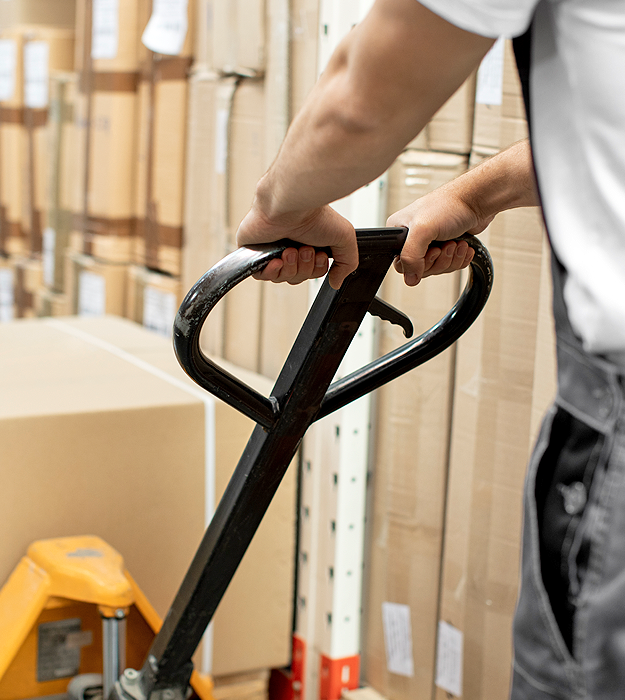

Evolving Warehouse Models
The traditional model of centralised warehouses is giving way to a more dynamic approach that includes both large distribution centers and smaller, localised facilities. This dual model allows businesses to manage bulk storage efficiently while improving delivery speeds for last-mile logistics.
-
Large Distribution Centers: These facilities serve as hubs for bulk storage and distribution, requiring high-density storage systems, robust flooring, and scalable automation. Technologies such as AS/RS and AMRs thrive in these expansive spaces.
-
Last-Mile Warehouses: Smaller facilities closer to urban areas focus on fast order processing and delivery. These facilities are increasingly integrating compact automation systems, such as collaborative robots and conveyor-based packing solutions, to meet local demand.
Avanta’s Role: We provide a complete range of tailored infrastructure, from the latest warehouse flooring solutions to adaptable mezzanines and high density storage systems such as narrow aisle racking, for all models of warehouse operation including both large-scale distribution centres and last-mile facilities.
Meeting Customer Expectations
Modern consumers demand convenience, speed, and accuracy. Warehouses must therefore rise to the challenge of meeting these expectations while maintaining cost-efficiency and scalability.
-
Faster Delivery: The demand for next-day or even same-day delivery in more densely populated areas of the country has pushed warehouses to adopt faster picking and shipping processes. Automation is making it possible for businesses to remain efficient while meeting customer expectations for fulfilment speed.
-
Order Accuracy: Errors in order fulfillment can lead to customer dissatisfaction and increased return rates. AI-driven systems and robotic picking technologies can significantly improve accuracy and efficiency, particularly as demand increases.
-
Personalised Fulfillment: As customers increasingly expect customised orders, including subscription products, individual product bundles, personalised packaging and made-to-order goods, warehouses need to be able to manage inventory dynamically and adapt processes for smaller, more frequent shipments.
Avanta’s Role: Our turnkey solutions to prepare for automation are designed to help businesses meet the needs of their customers and ensure facilities are fully prepared to integrate technologies such as AMRs and advanced picking systems into cohesive, efficient workflows.


Automation in Smaller Facilities
While automation is often associated with large warehouses, smaller facilities are also integrating robotics and automated systems to improve efficiency. Whether operated individually by SMEs or within the network of a larger business, smaller facilities, localised warehouses and micro-fulfillment centers can benefit from compact tailored automation solutions.
-
Robotic Picking Systems: These systems enable smaller facilities to handle high order volumes efficiently within limited space.
-
Automated Packing Lines: Compact conveyor systems streamline packing, reducing reliance on manual labor to move goods around the facility.
-
Flexible Infrastructure: Modular, high density solutions maximise the use of space and can adapt to evolving needs and changes to the types of goods being handled.
Avanta’s Role: With expertise in designing tailored and adaptable solutions, we simplify the complexities of robot-ready warehouses to ensure smaller facilities can benefit from automation and maximise space utilisation without compromising on flexibility or scalability.
Future-Proofing Warehouses
As warehouse technology continues to evolve, businesses must prepare their facilities not only for current demands but also for future advancements. Designing with scalability and adaptability in mind ensures that warehouses remain efficient and cost-effective as new technologies emerge.
Sustainability & Energy Efficiency
Sustainability in warehousing is about aligning facilities with long-term environmental and operational goals. Renewable energy sources such as solar panels and on-site storage reduce reliance on external grids, while IoT-enabled systems are able to optimise energy usage in real-time, minimising waste and reducing costs.
Future-proof infrastructure, such as AI-integrated HVAC systems, dynamically adjusts temperature zones to conserve energy and maintain ideal conditions for employees and robotics. These technologies help warehouses to optimise for efficiency around the clock, and be as environmentally sustainable as possible.
Preparing for Advanced Robotics
Sophisticated robotic systems require warehouses designed to integrate advanced automation seamlessly. Durable, anti-static flooring surfaces enable precise navigation and high-speed operations, while robust power and data networks minimise downtime and ensure operational continuity as fleets expand.
Collaborative robots demand flexible layouts that safely support human-robot interaction. This means designing spaces that meet requirements for both productivity and safety is key to leveraging these next-generation technologies effectively.
Adapting to Evolving Inventory and Workflow Needs
Warehouses must remain adaptable to shifts in product demand and operational requirements. For example, high density adjustable racking and shelving can accommodate varying inventory sizes within a relatively small footprint to optimise storage efficiency.
Other future-ready solutions include modular mezzanines and partitioning systems which are significantly faster and cheaper to install, reconfigure and adapt to meet changing workflow requirements, especially when compared to traditional construction methods. This provides businesses with the flexibility needed to support new automation technologies or increases in demand without major upheaval.
Infrastructure to Support Technology Integration
Advanced automation relies on cohesive integration of robotics, environmental controls, and data systems. Smart heating and cooling systems maintain optimal conditions for consistent performance, while security solutions like biometric access controls ensure protection as facilities expand.
Power and data networks form the backbone of warehouse operations, supporting robotic systems, IoT-enabled devices and AI-driven analytics. Vital components such as flooring and storage also need to be carefully considered to ensure they’re compatible with both current requirements and potential new technologies in future.
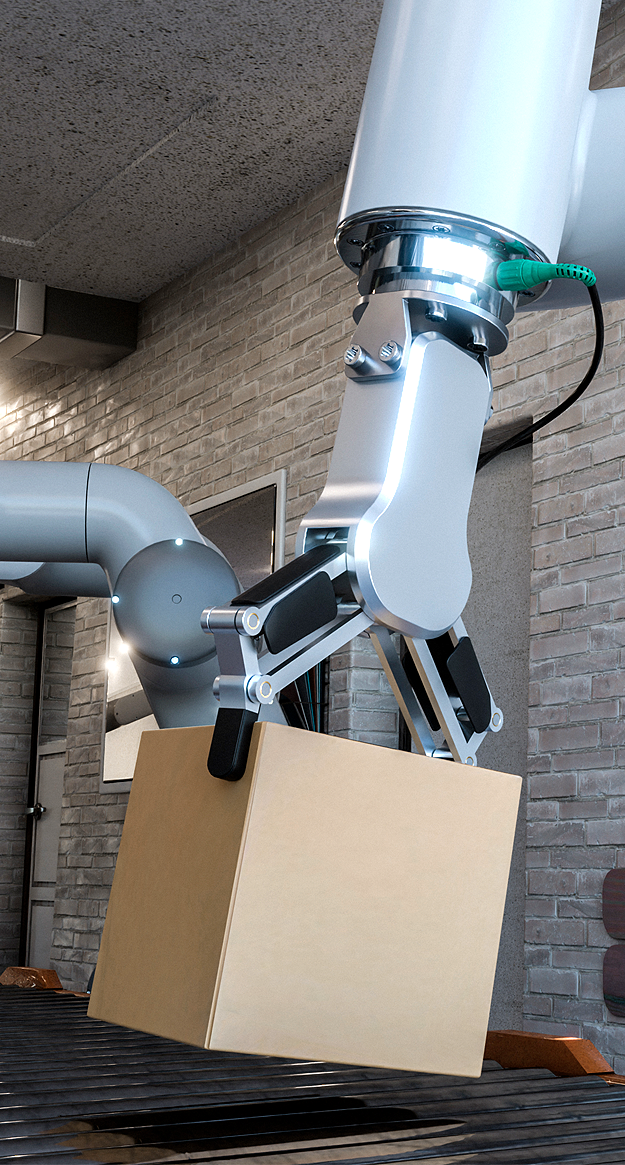
Future-Ready Design for Long-Term Adaptability
When it comes to designing warehouses for both today and tomorrow, key infrastructure should be designed with flexibility and longevity in mind. Whether it’s deploying new automation systems or expanding storage capacity, infrastructure that’s designed to evolve alongside technological and operational changes ensures that warehouses remain ready for the future without the need for more costly overhauls.
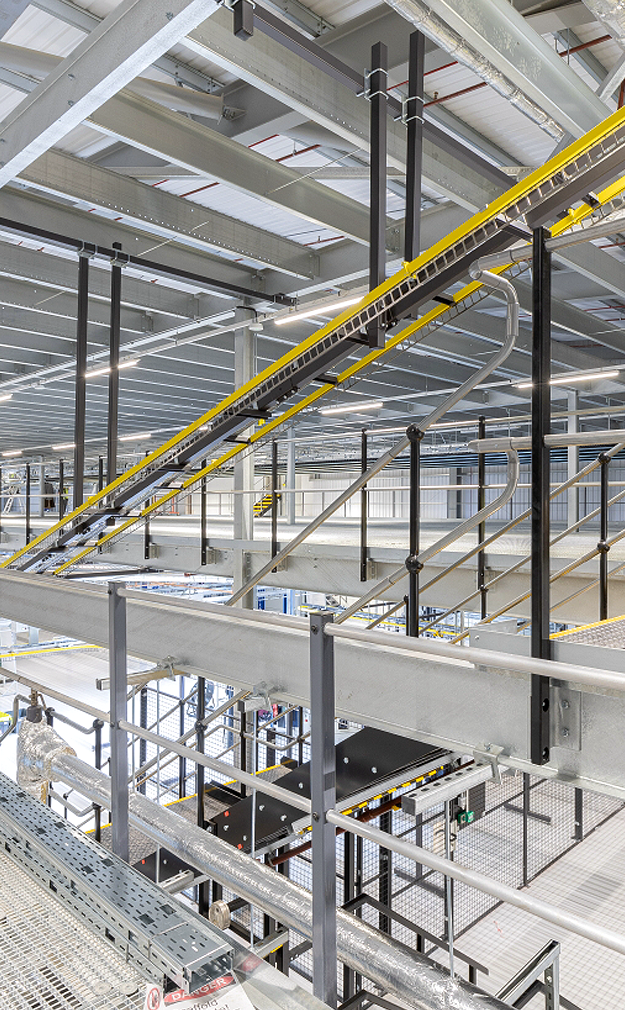
Mezzanine Floors
-
Warehouse mezzanine floors are built with future growth in mind.
-
These modular structures can be expanded or reconfigured as business needs evolve.
-
Mezzanines provide a stable platform for automation systems such as AMRs and AGVs to operate.
Flexible Storage Solutions
-
From high density pallet racking to specifically sized shelving systems, modern storage solutions are designed to handle a variety of inventory types and be compatible with a range of automation systems.
-
Adjustable racking configurations allow warehouses to optimise space usage, accommodating everything from small e-commerce items to large, bulky goods, and can be reconfigured or extended as needs change.
Scalable Safety Systems
-
Safety systems are critical for ensuring the protection of both employees and robotic systems in warehouse environments.
-
For example, machine guarding provides adjustable barriers that can be expanded or reconfigured as new technologies are introduced, maintaining a safe working environment as operations evolve.
-
Similarly, modular mesh security cages are designed to protect high-value inventory or sensitive robotic zones while allowing for future modifications, ensuring warehouses remain both secure and flexible.
Adaptive Partitioning Systems
-
Warehouse partitioning systems enable specialised zones for robotic operations, offices, or storage areas to be created quickly and efficiently.
-
Reconfiguring and adapting these systems to meet changing requirements is simple, meaning new technologies and workflows can be introduced in the future with minimal disruption.
The Role of ROBOTFLOOR in a Future-Ready Warehouse
ROBOTFLOOR is a high-performance resin flooring solution that is specifically designed to meet the demands of modern automation and robotic technology. It offers a number of key benefits that make it an ideal option when updating warehouses to integrate robotic systems prepare facilities for future advancements
Durability and Long-Term Performance
ROBOTFLOOR is built to withstand the wear and tear of heavy robotic traffic, ensuring consistent performance over time. Its anti-static properties protect sensitive robotic systems from interference, while its smooth, durable surface minimises maintenance requirements for both the flooring and the robots themselves.
Adaptability to Changing Technologies
As robotic systems evolve, ROBOTFLOOR provides a reliable long-term foundation for warehouse environments. Whether supporting high-speed AMRs, heavy-duty AGVs, or next-generation collaborative robots, it provides the stability and precision these systems require to operate efficiently. The versatility of a ROBOTFLOOR surface makes it suitable for both mezzanines and concrete floors, ensuring a seamless transition as warehouses upgrade their automation systems.
Enhancing Efficiency
ROBOTFLOOR improves the overall efficiency of warehouse operations by enabling smoother robot navigation and faster task completion. The low-friction surface allows robots to move quickly and precisely, reducing delays and improving productivity when compared to other types of flooring. Meanwhile, its durability minimises wear, ensuring fewer interruptions for maintenance and repairs.
Future-Ready Integration
Designed to integrate seamlessly with other infrastructure components such as mezzanine levels and racking systems, ROBOTFLOOR supports the creation of a cohesive, robot-ready warehouse that is suitable for future requirements, or simple to adapt as needs change.
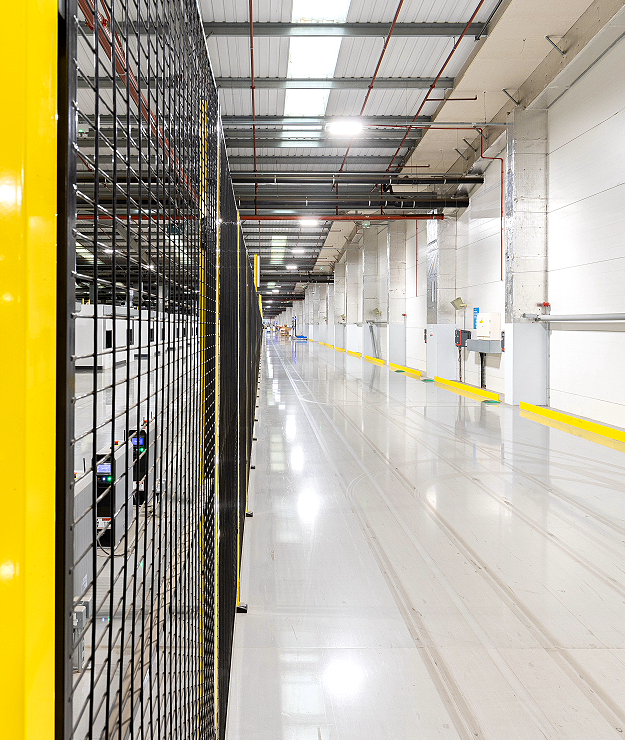
Integrating ROBOTFLOOR with Broader Warehouse Solutions
A successful warehouse relies on seamless integration between all its components. ROBOTFLOOR plays a key role in ensuring that the whole environment operates reliably, providing a strong foundation for both current and new technologies.
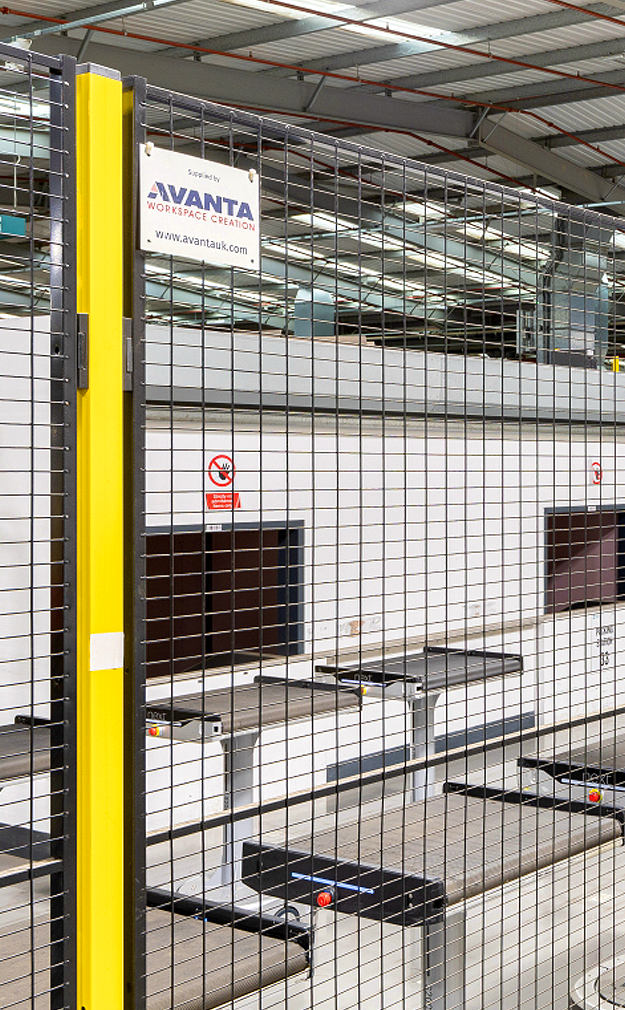
Integration with Mezzanine Levels
ROBOTFLOOR is perfectly suited for use with AMR and AGV mezzanine solutions, creating a smooth, anti-static surface that supports robotic systems operating across multiple levels. Equally suited to mezzanine and ground level operations, ROBOTFLOOR ensures consistent performance for robotic systems throughout the whole warehouse.
Supporting Storage and Retrieval Systems
Storage systems, such as pallet racking and warehouse shelving, rely on smooth and durable flooring to maintain stability and be used efficiently, particularly when robots are used to deposit and retrieve goods. ROBOTFLOOR ensures robots can operate at optimum levels of performance, accuracy, and reliability when interacting with any type of compatible storage systems.
Enhancing Safety Features
ROBOTFLOOR complements essential safety solutions such as machine guarding, safety barriers, and floor demarcation. The flooring’s anti-slip surface reduces the risk of accidents, while its compatibility with demarcation lines makes it easy to define and enforce distinct workflows for humans and robots.
Creating a Cohesive Ecosystem
When preparing a warehouse for automation, it’s easy to focus solely on the advantages that the robots will deliver. However, as well as selecting the right type of automation, it’s equally as important to ensure that every component of the facility is designed to work together to support current and future technologies.
From climate control and data infrastructure, to storage systems, partitioning solutions and safety measures, each element needs to be carefully planned and integrated to maximise operational efficiency and scalability.
ROBOTFLOOR plays a vital role within this broader ecosystem by providing the durable, technology-friendly foundation needed for smooth robotic operations. It forms part of a comprehensive design that ensures the seamless interaction of all warehouse systems, allowing businesses to benefit from a scalable, adaptable, and cohesive environment.
Take a look at our warehouse transformation case study to find out how ROBOTFLOOR has been used alongside other solutions to help one of the UK’s largest multi-channel retailers prepare a major fulfilment centre for automation.
Your Partner in Future-Ready Warehousing
As warehouse automation continues to evolve, preparing for tomorrow’s technology is more critical than ever. Solutions like ROBOTFLOOR, combined with thoughtfully designed, scalable and adaptable systems, make it possible to stay ahead of industry demands.
At Avanta, we provide end-to-end warehouse solutions to prepare for automation, covering everything from flooring, partitioning and mezzanine levels to the latest racking and storage systems. Our comprehensive range of services encompass every stage of the project, from designing tailored solutions that meet the unique requirements of each facility, to professional installation and ensuring full compliance with regulations and safety standards.
As your partner, our objective is to simplify the complexities involved in adapting your warehouse for robotics. Our proven approach minimises disruption, reduces the need to coordinate multiple subcontractors, and delivers a fully integrated, seamless warehouse environment.
Contact us to learn more about how our tailored solutions can help your business prepare for the next generation of warehouse technology.