
Warehouse Interior Design: Key Factors To Consider
Designing a warehouse can be a difficult prospect because a warehouse has to be a functional building for many different people. Whether it's administrators in the office sections, or the people on the ground loading, unloading, picking, and dispatching, a well designed warehouse enables individuals and the organisation as a whole to operate safely, efficiently and productively.
This means that when designing a warehouse - whether from the ground up, or as a project to update an existing building - there are many things that need to be planned. So what should the warehouse design process look like, in terms of key areas for consideration?

Type Of Warehouse
Before planning any kind of warehouse development or refurbishment project, it is first necessary to identify specifically the type of warehouse solution that is required. This essentially entails identifying the requirements of the business, what the warehouse will be used for, and the objectives that the project will help to deliver.
One of the primary considerations when planning a warehouse is to identify the types of items that will be stored or processed within the premises and the storage capacity that is required. Whether this is pallets, boxes, packaged items, garments or large pieces of equipment, the type and quantity of goods involved will dictate the most appropriate solutions for storage, depositing, accessing and picking or retrieving.
For example, e-commerce warehouse solutions in sectors such as consumer goods may have very different requirements than warehouses handling raw materials for industry. Consumer facing businesses may require specialised areas to handle and process customer returns, whereas other sectors may require solutions for the storage of large or heavy items.
Other types of warehouse may need to be climate controlled in order to correctly store perishable items. These types of goods may need to be stored in a first in first out configuration, which will dictate the type of pallet racking system that is most suitable.
In other sectors, such as when developing warehouse solutions for engineering, it will be necessary to include appropriate workspaces and if necessary clean rooms, as well as implement appropriate warehouse safety and security solutions.
All businesses are different, with individual requirements. And for this reason, before embarking on a project it is important to accurately define what the needs of your organisation are. This information feeds into the early design process and helps to clarify must have features for the space.
Warehouse Layout & Flow
When the requirements have been identified and the design for the warehouse project is underway, another primary factor to consider is the flow of the warehouse's layout. You want to be able to track the journey that both people and products are going to take through your warehouse space. This means you should have a clear designation of the bulk of the warehouse floor as well as any office or reception space, along with areas for carrying out specialised tasks, or for the storage of specialised items or equipment. All will need to have their individual flow.
It’s important to identify early in the design process how goods are received, stored, moved and distributed within the space. For example, items may enter the warehouse palletised in bulk, but exit for delivery as single boxes. This would necessitate areas for receiving deliveries, storing items, picking individual units, packing and finally preparing for dispatch of collection. These aspects, in particular analysis of the goods in and goods out processes, will help to identify requirements for external doors, loading bays and space to receive deliveries.
For your warehouse space, you need to consider the path incoming and outgoing items will take, relative to the specific nature of the warehouse. A system needs to be put in place where items are unloaded, sorted, and stored, before being able to be picked and loaded for delivery elsewhere. Track a logical flow through your building from unloading areas back around to loading areas helps to identify the most efficient layout and configuration possible, and ensures the right equipment and storage systems can be specified.
You may wish to create dedicated areas to handle customer returns, depending on your sector and offering, or perhaps store best selling or items requiring a fast turnaround as efficiently as possible to allow delivery, unpacking, picking and dispatch to be completed while minimising the amount of travel required by these items through the warehouse.
You must also consider the flow of people through the building - this counts for office staff as they head to their workplace, as well as those who are working on the warehouse floor. Consider not only how they get in and out, but the paths they might take to get their various jobs done. For example, think of the path a warehouse worker takes as they come into work, pick orders, and load them for distribution.

Operational And Safety Equipment
With a rough layout of your warehouse now in mind, you can begin adding some further details to it by including considerations for the equipment that you know you're going to need. Remember that equipment will need to be installed, so this should play a part in how you plan where it's going to go - this is true whether you're simply renovating an existing warehouse space, or designing from scratch.
You should take into account the specific equipment that your warehouse is going to be using, whether it be automated picking systems or the use of forklifts and pallet trucks. It's essential you know where they will "live" and how they will move around the warehouse space.
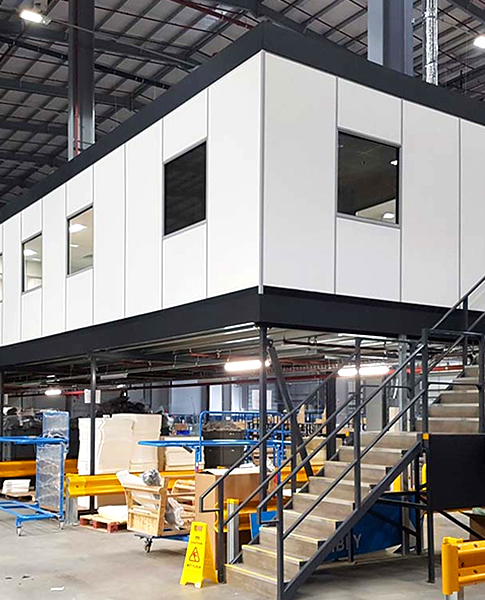
Safety equipment also has to be a top consideration of your planning process. This includes the provision of general first aid stations/cabinets, appropriate burns treatment capabilities if you're going to be dealing with flammable or corrosive substances, as well as any necessary fire fighting equipment required to meet code. In some cases it may be necessary to ensure storage systems are fire rated, particularly if your warehouse will include a mezzanine level, whether used for storage or other tasks. This should apply for both warehouse and reception/office spaces, and you should also implement any general HSE or PPE considerations here too.
Railings, specifically guided walkways, one way systems, and any accessibility features you are going to implement to make access for disabled employees as easy as possible, are all key ideas.
Other important considerations that are fundamental to the design and operation of your warehouse include the position of staircases, the requirement for and placement of lifts and the location of fire exits. These will all need to be carefully planned in order to create a safe environment.
Warehouse Security
Security is an important consideration for any business, and whether you’re refurbishing your current warehouse or planning for a new space, it is the perfect opportunity to look at assessing and improving workplace security where necessary.
In a warehouse environment, there are often high value items that need to be stored securely and a great way to achieve this is by installing mesh security cages. These enable access to items to be strictly controlled, while providing visibility to enable monitoring of the goods, such as via a CCTV system.
The layout of your warehouse should also be planned to account for security considerations. This may mean minimising blind spots in the space, as well as restricting entry routes and exits whether by the use of personnel or secure entry systems.
It’s also important to be able to accurately track the movement of goods into, through and out of the warehouse to minimise losses, and a suitable layout used in combination with some of the latest technology systems can help to achieve this.


Warehouse Technology Implementation
In a bid to make themselves as efficient as possible, many warehouses are implementing more and more technology. If your warehouse is going to do this, you'll have the best chance at seamless integration if you allow for it during the planning stages.
There are many different examples of warehouse technology that you might think about integrating. This might be automated picking tools or Automated Guided Vehicles (AGVs), for example, in which case you will need to plan their safe travel around your warehouse space.
It may also be an Automated Storage/Retrieval (AS/AR) system, in which case your warehouse storage and racking will need to be designed in line with the machine's reach. You could also consider Internet of Things implementation, which would involve improving connectivity and communication from a number of different appliances and pieces of equipment within your warehouse space.
Whatever you are doing in order to improve your efficiency, make sure you take into account its requirements as early as possible during planning.
Heating, Cooling, Lighting & Utilities
There are certain things that are fundamental requirements of not just warehouses, but of most buildings whether commercial or not. Utilities such as gas, water and power are of course vital to enable a warehouse to function. As part of a refurb or new setup project, these need to be considered and the appropriate routing of items such as power cables, water pipes and gas supplies built into the design.
Another important element is heating and cooling, and you may find it necessary to upgrade or install a completely new system depending on the scale of your project. It is important to be able to maintain the desired temperature all year round, to ensure the comfort and safety of staff and also to provide the correct storage conditions for items that may be impacted by being stored in either too hot or too cold an environment.
Along with mains services and heating and cooling, the lighting requirements of the space need to be carefully planned. Due to their format, most warehouses are not abundant with natural light and so it is important that work areas are adequately illuminated to enable staff to work safely and accurately.
Depending on the nature of your operation, you may require a lighting system that works 24 hours a day, or one which can be turned off at night. Automating certain aspects of your lighting, such as switch on and switch off times, or illuminating only the areas that are being used via motion sensors or other similar systems can also help to reduce the environmental impact of the space as well as delivering savings on utility bills.

Staff Facilities & Office Space
Whatever the scale and type of business you operate, it’s important to ensure that the correct facilities are provided for staff. This may include break rooms, canteens, lockers and changing rooms as well as toilets and washrooms. You should account for current as well as future staffing levels in order to ensure that enough space and facilities are provided. This will depend to a certain extent on the nature of your operation, and the requirements that employees will have.
Another important consideration is the office space available in the premises. For some companies, a small office space is sufficient, whilst others will require a much larger space for administrative and operational tasks to be carried out. It’s wise to ensure that the office areas created in a warehouse are sufficient to accommodate planned growth, or can be extended in future should the need arise without causing significant disruption.
Local Authority Regulations
With an idea of the layout of your warehouse in place, you can now check it against any specific rules, regulations, codes, and guidance that your local authority may have. There will almost certainly be rules in place dictating certain elements of how your warehouse will have to be laid out.
It's important to have a rough framework in mind first, so you can better alter your plans to suit your local guidelines. If you're not sure of them, this is when you should seek input from the local authority themselves, or your project delivery partner, for further help.

Scope For Future Growth
A key mistake often made in warehouse design is not planning for the future. If your warehouse is going to thrive, you need to account for the possibility that your throughput is going to increase over the coming months and years. Consider this when you're designing your layout. For example, can your storage spaces operate safely if you add half again to the current volume of throughput? What about your walkways - are they able to safely contend with a larger number of employees while still remaining safe?
It's much easier if you build in plans for your future growth at the design stage, rather than waiting until you're operating over capacity and wondering what to do.
Look at your previous examples of business growth, and use those increments to give yourself future figures to work with - if you managed those figures in your previous space, you should easily be able to manage them in your new, more efficient warehouse. This should give you the time needed to be able to engineer in scope for growth throughout every aspect of your warehouse, whether it's taking on more office staff to handle the increased administration, or your loading/unloading bays being able to handle a higher volume of vehicles.
If you expect that your operation will increase in scale then you may wish to build in plans for expansion via the use of solutions such as mezzanine flooring. This can provide valuable additional floor space suitable for almost any application, and can usually be installed relatively quickly and cheaply when required.
On a similar note, if growth is forecasted, it is sensible to identify and plan for potential reconfiguration of your warehouse space. This means implementing solutions and creating areas that are flexible so that they can be adjusted or expanded as required. For example, you may wish to install additional racking or storage at a later date, or change the layout of your space which can be easily achieved through the use of products such as steel partitioning rather than permanent walls.
If necessary, you may want to identify the availability of land on or near the site that could be used for potential future growth. Is the warehouse sited on a plot with space that could be built on should you wish to extend your operation in future? Would planning permission likely be granted or this? Is land available adjacent to your warehouse that could be acquired and used for growth in future? These are the kind of questions you should be asking, particularly if you are looking at setting up a warehouse in a new location.
Take Your Time And Plan Thoroughly
These key steps should give you a framework from which to design a truly great warehouse that can not only operate efficiently and safely but also offers you the ability to embrace consistent growth.
If you are planning a new warehouse or refurbishment project, contact Avanta to discuss how we can help. With over 20 years experience, we work with businesses throughout the UK to create functional workspaces, tailored to the specific needs of each client. We offer a comprehensive turnkey service and unrivalled support whatever the scale of the project.
Related Case Studies
Warehouse Interior Fit Out For Award Winning Airline
Large Pallet Racking Project For Leading Home Delivery Company
Interior Fit Out To Create Distribution Centre With All Storage Equipment
Helping Award Winning Fulfilment Company Reach Next Level
Warehouse Project By Avanta UK - More Than Storage Equipment