

of Technology in Warehouse Environments
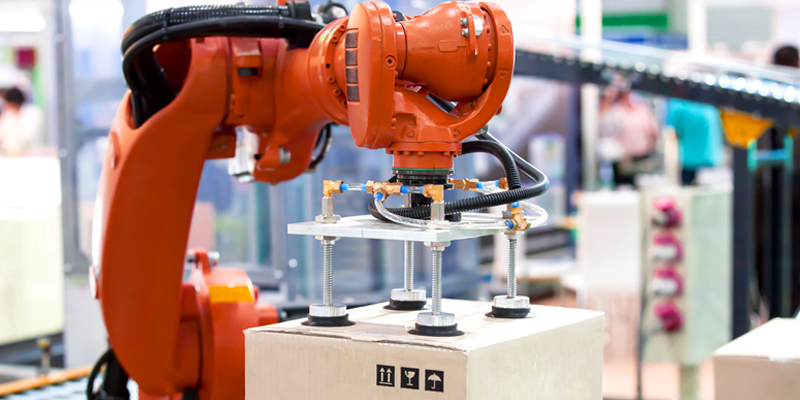
Robotics and logistics are the perfect match. So, it’s no surprise that once invented, automated machinery quickly became commonplace in warehouse and distribution operations. The earliest forms of robotics have been working seamlessly, flawlessly and with minimal human involvement in inventory control for decades (incidentally, the first robotics patent within manufacturing and supply chains was granted in 1961).
When eCommerce and order fulfilment exploded, robots were the only way to keep pace with demand for swift, accurate picking, packing and delivery. However, if it’s one thing that you can truly reply on with technology, it’s that it never stands still!
Emerging tech for warehousing operations is the perfect example of this. The data, machine learning and AI systems backing it are growing ever more sophisticated. This is synergic with greater innovation in engineering design. The sum total is autonomous warehouse equipment that can deliver incredibly complex tasks, learning as it goes, and transforming this sector completely. At the heart of this is the opportunity to cut labour costs by around 70%, but also to achieve important efficiencies.
What’s New In Warehouse And Distribution Tech?
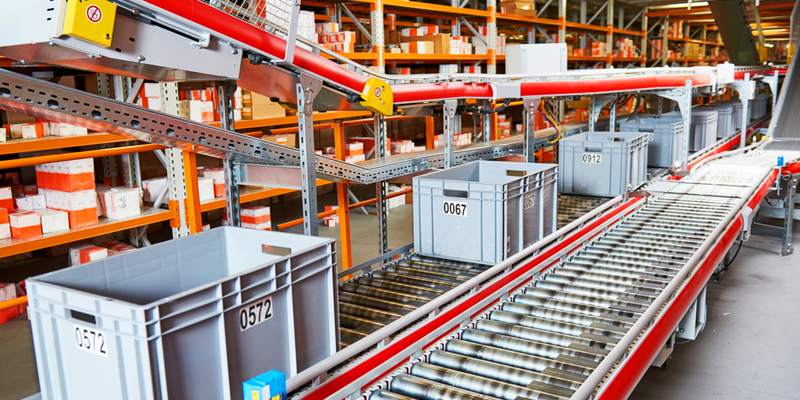
This technological field is becoming so advanced that robots and automated systems can carry out not just mundane and repetitive functions, but also skilled tasks. Tasks that require spontaneous 'thinking'. In fact, they can already operate on a scale that was hard to imagine even a few years ago. This is why distribution centres and warehouses are growing in size, often designed to accommodate an army of robotic ‘employees’. They are expanding upwards as well as outwards, as robotic storage and retrieval systems can be designed across a multitude of layouts including on crane structures.
There is also increasing reliance on ‘last mile’ delivery drones and Autonomous Mobile Robots (AMRs). These can now carry items over relatively large distances and around even the most complex warehouse sites. They can find the quickest routes and negotiate an ever-changing landscape, thanks to the power of Artificial Intelligence. Automated guided vehicles can also deliver and collect in conditions and situations when human involvement would be difficult or hazardous, such as in chemical storage situations.
Another of the exciting developments in warehouse robotics and automation is on a much smaller scale. It is now possible to put sensors not just on your conveyors or vehicles, but within every pallet and box they handle. From this, data analysis can time stamp consignments of goods and track them on journeys. This clearly means transparency over the entire warehouse and distribution life cycle of items. Anyone receiving goods can be ready and waiting for the handover with minute-by-minute accuracy. Using the latest data and automated technology, it is also possible to monitor the condition of those goods throughout their life cycle. Are they being kept at the optimum temperature and handled correctly for example?
Warehouse Technology – Getting Left Behind Is Not An Option
Such is the impact of this emerging technology for warehousing, distribution and logistics, that the cost of not investing could be catastrophic. This is why in one survey by IDC, 90% of all supply chain companies and leading industrial players reported plans to integrate commercial service robots in one capacity or another. There is also research to suggest that the use of automated technology in order fulfilment will increase 15-fold by the end of 2021.
The reverse side of this statistic is a substantial fall in manual operations in warehouse and distribution departments, which is set to gather pace as AMRs become ever more agile and responsive. Why pay for labour, when the technology exists to do the same jobs quicker, with minimal risk of error?
The Commercial Advantages Of Automating Warehousing
Having robots to carry out laborious processes is clearly a way of introducing greater efficiency and control. There are other benefits to investing in this technology too. Health & Safety compliance and concerns can be less onerous when robots are ‘recruited’.
As the AI systems that support robotics become more advanced, companies can increasingly depend on them for versatile and intuitive functions. This increases the tasks they can carry out and the accuracy of their services. Having such reliable, quality-controlled functionality in a warehouse – 24/7 – can be the rock bed of business growth and development.
Errors and oversights reduce, leading to less wasted time, misplaced stock or products that pass their shelf life. Stock is rotated and replenished effectively too, further reducing delays and waste. Order fulfilment becomes slicker, faster and more responsive as technology progresses, making forward looking investors stand out from their competition. Warehouse and logistics teams able to act quickly to every opportunity, threat and demand, are likely to be the ones winning the contracts from efficiency-obsessed clients.
Also, the data mining and analysis abilities provided by modern robotics are invaluable to ambitious companies. They provide end-to-end control and transparency, enabling even greater levels of efficiency.
The Future Of Warehouse Robotics And Automation
This sector is affected by the push of emerging tech, but also the pull of companies hungry for ever more productive and efficient systems. As a consequence, it’s predicted that by 2027, materials handling and logistics technology will be worth $75billion globally. By 2038, this figure could well have doubled!
The shopping list of autonomous technology for warehouse and distribution operations will be topped by mobile robotics. This will include both guided (AGV) and autonomous (AMR) vehicles and carts. What is the difference between AMR and AGV? Guided robotic vehicles and carts work along a pre-set route or track. They are often a lower price point. Autonomous mobile robots are supported by advanced AI and can respond to their environment, using sensors and location data to plan and react as they move around your warehouse. Many consider these to be where true innovation and efficiency are to be found.
Planning to increase your reliance on robotics must also include following developments in drone technology and machinery to carry industrial materials long distance. Both use optical systems and deep learning technologies to navigate and carry out precise functions. Including travelling into difficult to reach or hazardous locations.
The checklist of ‘must-have’ tech will also continue to include ever more advanced mobile storage and retrieval systems. As the range of mobile robotics increases, the future is likely to include automated collection and delivery systems from site to site, or from site to customer. This will include further development of the way such items as machinery parts are delivered to ships and rigs, or remote and inhospitable locations. It's safe to argue that all warehouse, distribution and logistics functions will one day soon be left the capable ‘hands’ of sophisticated robots. Robots backed by advanced software configured to any business operation and site.
Ensure Your Warehouse And Facilities Are Future Ready
Integrating automated systems into a warehouse environment is one of the biggest industry trends taking place at the moment, and data suggests it’s only going to get bigger. Whether you’re updating your warehouse to integrate new systems, or simply to improve efficiency, it’s vital to adapt a solution that fits the needs of your business and that will let you continue to grow and adapt in future.
For example, getting the right warehouse racking system to fit your space and your plans is vital, and must be carefully considered and planned to ensure it is compatible with robotic or automated systems that you wish to use.
Other options to be aware of include increasing floor space for picking, packing or to use for other functions such as office by integrating one or more mezzanine floor levels into the building. Mezzanines can also be a great option to create additional dedicated space for robots to operate in many industries.
When adapting a warehouse space for increased automation and use of robots, there are of course a range of items to identify and update. These include ensuring that the correct flooring surfaces are used for robots to run on which should be smooth, hard wearing and designed to reduce static build up to ensure trouble free operation, along with the installation of mesh fencing or security areas to restrict access, enabling high levels of safety to be maintained when robotic systems are implemented.