
Why Pallet Racking Weight Ratings Exist
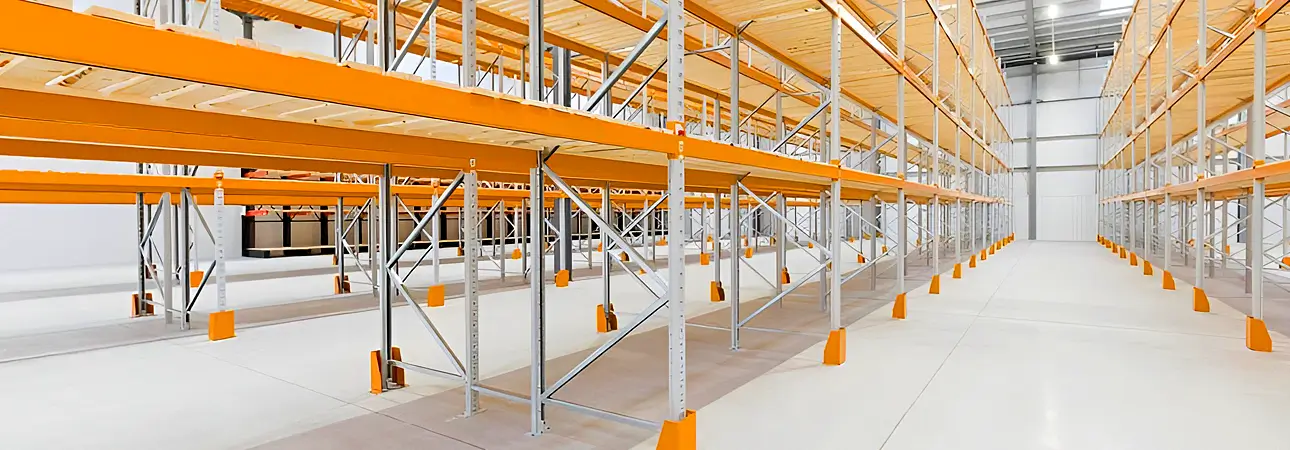
Sometimes people assume that racking weight capacity is a single number stamped on the frame. In practice, it's a set of interlinked figures: beam capacity, frame capacity, and overall bay capacity, that all depend on the racking configuration, the number of beam levels, and how evenly loads are distributed.
The weight rating accounts for all these variables. For example, a system rated for 3,000kg per beam level might still be unsafe to hold that weight if the frame beneath it can't handle the combined weight of every level stacked above it.
More about: Pallet Racking & Warehouse Racking Solutions
The Standards Behind the Ratings
That's because pallet racking is a designed structure, not a generic shelving product. Every component, from the upright frames and beams to bracing and base plates, is engineered to work together within defined tolerances. When a manufacturer issues a load rating, it reflects testing and calculation against two European standards:
- BS EN 15512: Static racking design, covering how the structure is engineered and rated in the first place.
- BS EN 15635: Application and maintenance, covering how racking should be used, inspected and documented once it's installed.
How Small Problems Become Structural Ones
Racking failures are rarely caused by a single overloaded pallet. They're usually the result of cumulative small errors, such as:
- A slightly bent beam that's never been reported.
- A forklift impact that weakened an upright.
- A warehouse team that started storing heavier SKUs than the racking was originally specified for.
Weight ratings give you a fixed reference point so you can catch these problems before they become structural.
Your Load Notice Is the Reference Point
Under BS EN 15635, every racking installation in the UK should display a load notice. This should be a durable sign fixed to the structure stating the safe working load (SWL) per bay, per beam level, and the overall bay capacity. If your racking doesn't have one, or the notice doesn't match your current stock, it's a compliance gap that should be addressed immediately.
How Load Ratings Are Calculated

Racking ratings aren't derived from a single formula alone. Uprights and beams are cold-formed from thin steel and punched with slots and holes, and that perforated, thin-walled geometry behaves in ways pure calculation can't reliably predict. BS EN 15512 therefore sets out a hybrid method: physical testing to establish how the real components behave, then structural analysis using those measured values.
The Three Stages of Testing and Calculation
In practice it runs in three stages:
- Component testing. Individual parts are loaded to failure in a test rig. The critical ones are the beam end connector (how much moment the clip-and-upright joint can carry before it pulls out or distorts), the upright section itself under compression, and the baseplate-to-floor connection.
- Structural analysis of the whole frame. The measured component values are fed into a model of the complete bay, which is analysed for the worst realistic load case, including the frame's own dead weight, out-of-plumb tolerances from installation, and the sideways forces the structure has to resist.
- Applying safety factors. The calculated capacity is reduced by partial safety factors covering material variation, imperfect erection and normal in-service wear. What's published as the rating is the figure that remains after those deductions.
A configuration only passes if it satisfies two separate criteria: it must not fail structurally, and it must not deflect excessively. Beam deflection under full load is capped at a proportion of the span (commonly quoted as span/200) because a beam that sags visibly makes pallet entry and retrieval unsafe long before it is anywhere near collapsing. On longer spans, it's often this deflection limit rather than raw strength that sets the published figure.
The Variables That Change the Figure
The variables that feed those calculations include:
- Beam length and section profile: Longer beams flex more under load, so capacity drops as span increases.
- Frame depth and upright profile: Deeper frames and thicker-gauge steel generally support higher loads.
- Number of beam levels: The load on the base frame is cumulative, not just the weight of the top level.
- Bracing pattern: Diagonal and horizontal bracing affects how the frame resists sideways and forward loading forces.
The result is a set of ratings specific to that exact configuration, not to the product range in general. Change the beam length, add an extra level, or swap the bracing, and the tested and calculated basis for the original rating no longer holds.
This is why racking weight capacity can't be assumed from a spec sheet alone once a system has been modified on-site, and why mixing components from different manufacturers invalidates a rating, since the connector test that underpins it was carried out on one specific beam-and-upright pairing.
Beam Capacity, Frame Capacity & Bay Capacity Explained
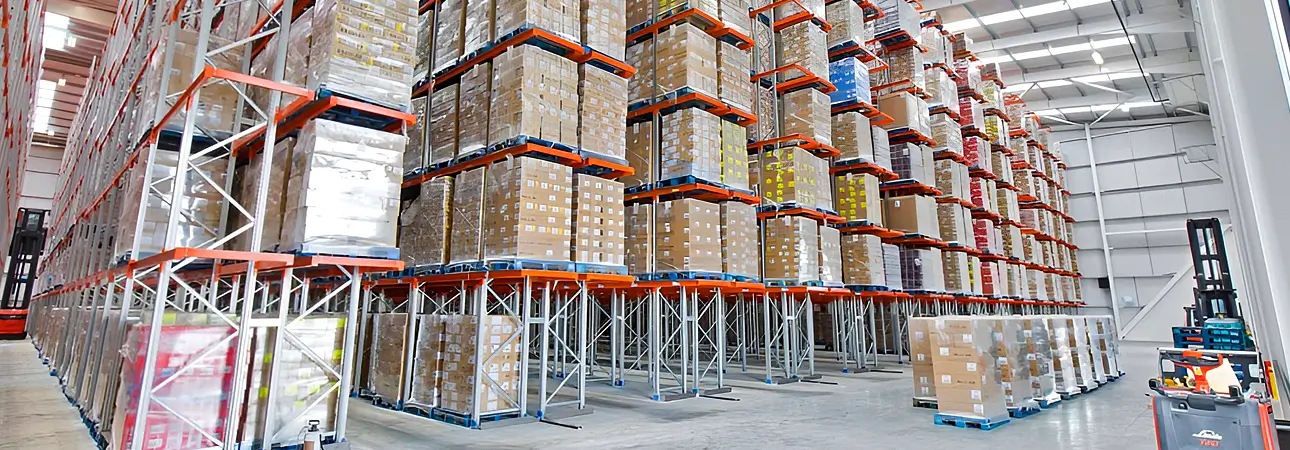
Understanding racking weight capacity means separating three distinct ratings that often get confused with one another.
The figures and terminology that follow describe adjustable pallet racking (APR), which is the standard beam-and-upright system found in most UK warehouses. However, other systems, from drive-in to cantilever, are available for different purposes and are rated differently, and those differences are outlined below.
1. Beam Capacity (UDL and Point Load)
Beam capacity is usually expressed as a uniformly distributed load (UDL). This is the maximum weight a beam pair can hold when the load is spread evenly across its length, typically measured in kilograms.
Beams are also sometimes rated for point loads, relevant when pallets sit on just two or three contact points rather than spreading weight across the full beam.
A typical medium-duty beam pair on a standard span might carry a UDL rating in the 2,000kg to 3,000kg range, but this varies significantly by manufacturer, beam profile, and span length.
Always check the rating for your specific beam length; the same profile rated at 2,500kg over a 2.7m span could drop considerably over a longer 3.6m span.
2. Frame Capacity
Frame capacity refers to the total load the upright frame can carry across all beam levels combined, transferred down through the frame to the floor. This is where cumulative loading matters most.
If you have four beam levels each loaded to 2,000kg, the frame needs to safely carry 8,000kg plus the weight of the racking structure itself, not just the heaviest individual level.
Frame capacity also depends on the height of the frame and the load's centre of gravity; taller frames are more susceptible to instability under heavy or uneven loading, which is why height-to-depth ratios are factored into the original design calculations.
3. Bay Capacity and Safe Working Load (SWL)
Bay capacity is the overall figure most warehouse managers actually need day to day. It tells you the total permissible load for one complete racking bay, combining beam and frame limits into a single practical number.
The safe working load (SWL) is this figure expressed on the load notice, and it should always be treated as the absolute ceiling, not a target to aim for. It's worth noting that SWL already includes a safety margin built in during design and testing.
The SWL safety margin exists to cover minor variables like uneven loading or slight impact damage; it is not there to be used as spare capacity for routinely overloading the system.
Does This Apply to Every Type of Racking?
The three-tier model above (beam, frame, bay) describes adjustable pallet racking. Other racking types are engineered and rated differently, so the figure you're looking for isn't always a beam UDL:
- Drive-in and drive-through racking: Pallets rest on support rails rather than beam pairs, so capacity is stated per rail position and per lane depth. Because forklifts drive inside the structure, impact damage is a bigger factor in retained capacity.
- Push-back and pallet live (roller) racking: Loads sit on carts or roller lanes, and ratings are given per cart or per lane. Pallet condition and lane gradient affect safe operation as much as the stated weight figure.
- Double-deep racking and narrow-aisle racking: Built using the same components as standard pallet racking, but deeper reach and tighter aisles change the handling risk and frame exposure rather than the beam rating itself.
- Cantilever racking: Rated per arm, per column and per bay, with arm length having a direct effect on capacity. There are no beams or bays in the traditional sense.
- Longspan and industrial shelving: Rated as a UDL per shelf level across decking, usually at much lower figures, and generally hand-loaded rather than forklift-loaded.
What doesn't change is the framework around them: BS EN 15512 and BS EN 15635 still apply, a load notice is still required, SWL is still a ceiling rather than a target, loads still accumulate down through the structure to the floor, and any impact still warrants inspection before reloading.
If you're running a mixed site, each system needs its own load notice and its own set of figures; never carry a rating across from one racking type to another.
Reading a Racking Load Notice Correctly
A compliant load notice, as required under BS EN 15635, typically includes:
- The maximum UDL per beam level
- The maximum load per bay
- The number of beam levels the rating applies to
- The date of installation or last inspection
- Contact details for the racking inspector or responsible person
If any of this information is missing, faded, or doesn't match a recent racking survey, treat it as a compliance issue to resolve before the bay is loaded again. Load notices should be reviewed every time the configuration changes (for example, when new beam levels are added, spans altered, or heavier stock is introduced), not just at annual inspection.
How to Apply Weight Capacity Data in Practice

Knowing the theory behind racking weight capacity only helps if you apply it correctly on the warehouse floor. Here's how to translate the ratings into day-to-day practice.
Match your heaviest pallet to the lowest-rated component in the system
- Your racking is only as strong as its weakest rated element.
- If your beams are rated for 2,800kg but your frame's cumulative capacity across four levels caps out lower once dead load is accounted for, the frame figure governs, not the beam figure.
Weigh your pallets, don't estimate them
- Many overloading incidents stem from assumed pallet weights rather than measured ones.
- If your stock profile has changed due to factors such as heavier packaging, bulk buying, or seasonal stock swings, recheck actual pallet weights against your load notice rather than relying on historic assumptions.
Distribute load evenly across the bay
- Concentrating weight at one end of a beam, or loading only the top levels of a run of racking, changes the effective stress on the frame even if you're technically within the overall SWL.
- Even distribution keeps the system within its tested parameters.
Account for the racking configuration, not just a generic weight limit
- A configuration with wider aisles, taller frames, or narrower beam spans will carry different ratings from a standard version of the same product range.
- When you're specifying new racking, this is where working from confirmed manufacturer data rather than a rough number from a previous installation genuinely matters.
Reinspect after any impact
- Forklift collisions are one of the most common causes of reduced racking weight capacity in service.
- A bent upright or dented beam can lose a significant proportion of its rated strength even if it looks only cosmetically damaged.
- Any impact should trigger a rack inspection before the bay is loaded again.
Keep load notices current
- If you've reconfigured beam levels, changed pallet types, or added mezzanine access points that alter loading patterns, update your load notice to reflect the new reality.
- An outdated notice creates a false sense of compliance.
Schedule regular racking inspections
- BS EN 15635 recommends professional rack inspections are carried out regularly.
- Inspections are typically on an annual basis for standard use, though higher-risk or high-throughput environments may need more frequent checks.
- These inspections catch capacity-eroding damage before it becomes a live safety hazard.
Fully Compliant Racking, Expertly Designed & Installed
Whether you're reviewing your current setup or specifying a new installation, it helps to work from racking systems with clearly published beam and frame ratings rather than generic capacity claims. Confirmed load data at the point of designing the system saves time and risk further down the line, particularly if your stock profile is likely to change as your operation grows.
At Avanta, our team can talk you through beam, frame, and bay ratings for your specific stock profile before you commit to a configuration. Our full turnkey service covers everything from initial site survey and consultation, to design and 3D modelling, through to installation, handover and support. Our process includes full project management so you can be confident that your racking system has been purpose-designed to be fully compliant and meet or exceed your capacity needs now and in the future.
Avanta is CHAS, Constructionline, and Safecontractor accredited, and our racking installations meet SEMA standards and are carried out by SEIRS-qualified installation teams. We're also able to act as Principal Designer and Principal Contractor, giving you a single point of contact, whatever the scale of your warehouse project.
If you're planning a new racking installation or need to confirm the weight capacity of an existing system, get in touch with our pallet racking experts for help, advice, or to book a free site survey.
Frequently Asked Questions
Q: What is the difference between racking capacity and safe working load?
A: Racking capacity generally refers to the structural maximum a component can theoretically hold, while safe working load (SWL) is the practical figure on your load notice, already adjusted with a safety margin. SWL is the number you should always work to on-site.
Q: How often should racking weight ratings be checked?
A: Load notices and ratings should be reviewed whenever the racking configuration changes, after any impact damage, and at every scheduled inspection (typically annually for standard warehouse use, in line with BS EN 15635 guidance).
Q: Can I increase racking weight capacity by adding extra bracing?
A: Sometimes, but only if the additional bracing has been specified and calculated by a competent racking engineer or the original manufacturer. Adding bracing without proper calculation doesn't guarantee a higher rating and can create a false sense of safety.
Q: What happens if racking is loaded beyond its rated capacity?
A: Overloading increases the risk of beam deflection, frame buckling, or full structural collapse. It also typically voids manufacturer warranties and can breach health and safety obligations under UK workplace regulations, exposing the business to enforcement action following an incident.
Q: Does pallet weight distribution affect the rated capacity?
A: Yes. Ratings assume a reasonably even distribution of weight across the beam and bay. Concentrated or off-centre loading can exceed the safe stress limits of a beam even when the total weight is within the stated SWL.