
How To Bring An Old Warehouse Up To Date
Warehouses are often considered to represent the beating heart of industrial life. However, despite being integral to the efficient running of many profitable businesses around the world, they are sometimes overlooked as areas for improvement and investment.
Often distant from the action on the ground, it is all too easy for entrepreneurs and managers to simply make do with an outdated warehouse set-up, rather than spend time cultivating a building and facilities that are truly aligned with business needs.
Spaces that are kitted out with the latest technologies and efficient storage systems, however, can play an integral role in improving business performance and ultimately boosting profits. Whether you’re a 3rd party logistics provider looking to improve the efficiency of your operation, or an e-commerce company that needs to bring your storage and fulfilment up to date, investing in the right warehousing solutions can make a big difference to your bottom line.
If you’re currently making do with an outdated warehouse, we’ve put together a list of some of the key areas to look at to bring it up to date. As well as potentially strengthening your company, such improvements could also significantly improve the working lives of your employees.
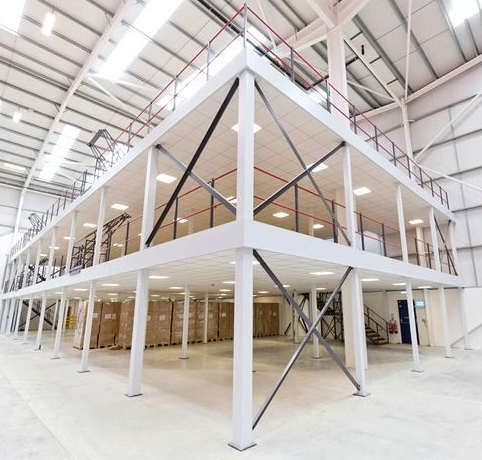
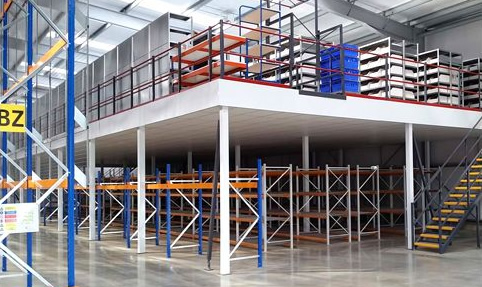
Installing a mezzanine system in a warehouse is one of the best ways to use your available space efficiently. This is because they use vertical space as well as horizontal space, providing an accessible second floor that sits above the ground level of the warehouse.
Whilst it may sound a little arduous to set up, a mezzanine floor can actually be installed very quickly, thereby minimizing business downtime and disruption. For businesses requiring additional space, the use of mezzanines is usually significantly cheaper and less disruptive than relocating or extending a building externally.
What’s more, mezzanine floors can be specified with warehouse-specific features that will help business operations run as smoothly as possible, such as crossovers, floor lifts, conveyor platforms and mesh guard systems.
Mezzanines can also be used to add office space to a warehouse environment, as well as to increase the storage capacity of the premises. This makes them a good solution for organisations wanting to expand their operations or needing to accommodate additional staff who may be performing different roles to those on the warehouse floor.

2. Invest In Better Stocking Systems
Tracking and handling stock is often the most complex aspect of warehousing, as there are numerous potential pitfalls involved. Small mistakes that could throw a whole system into disarray such as misplacing a product, mislabelling a product, miscounting items or receiving incorrect shipments.
Thanks to technology, this does not have to be the case. Investing in an up-to-date inventory and tracking system could help you and your colleagues to:
- Control your inventory more accurately, including across multiple branches and locations. This will help to ensure that your customers are kept satisfied and you remain in control of margins.
- Track items at all stages of their journey including the supplier stage, the processing and picking stage, and the delivery and returns stages. You can also share some of this information with your customers to reassure them about the status of their product order.
- Manage space more efficiently by ensuring that operatives know precisely where each and every item is kept.
- Make information about warehouse management more visible so that any problems can be identified and addressed at an early stage.
3. Employ Some Helpful Robots
They may sound like the type of thing that could be a little too futuristic or pricey, but warehouse robots are increasingly being enlisted to help conduct tasks such as picking, packing and processing.
Indeed, thanks to swift developments in automation technology, many businesses are affordably able to use robots alongside warehouse personnel to complete the physical processes involved in warehousing quicker than ever before.
4. Invest in Made For Purpose Pallet Racking
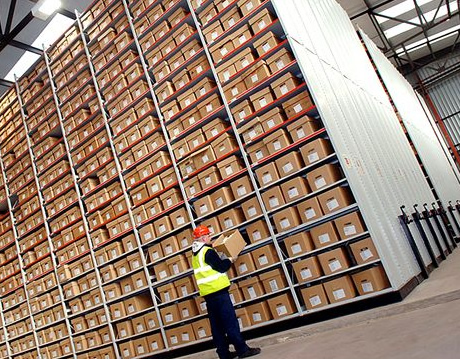
The latest pallet racking systems can help you to increase the storage density of your warehouse, thus helping you to meet usage requirements and maximise the storage capacity of your space.
Modern pallet racking is available in a range of configurations and types, each designed to best meet certain usage requirements.
From high density storage offered by narrow aisle racking or double deep racking to room to store large, bulky or long good with a cantilever racking system, a pallet racking solution that is designed around the individual needs of your business can reap significant rewards in terms of efficiency, productivity and ultimately profit.
Pallet racking is not usually a one size fits all solution, and so the type of racking used in your warehouse should reflect the nature of your business, the types of goods being stored and the workflows involved in your operation.

5. Consider Rearranging Your Aisles
Before you go about purchasing any new tools or systems for your warehouse, it is a good idea to thoroughly assess the layout of your warehouse to determine whether there are any inefficiencies in your aisle layout.
As a general rule, aisles should be as narrow as possible, while taking into account factors such as the types of materials that will need to pass through them and whether they are wide enough to fit certain robots, machinery or forklifts.
It’s usually best to consult a professional installer if you are thinking about reconfiguring your space as they will be able to recommend on the most efficient layout to use as well as advising on the type of racking, storage or warehouse shelving that best suits your needs.
When it comes to reconfiguring or replacing your storage system, safety is key and consulting an experienced installer will ensure that all safety aspects are considered and the project is managed and carried out in a safe way.
6. Switch to LED lighting
Although switching your lighting from standard bulbs to LED lights will not do much to improve the efficiency of your warehouse operations, it could significantly reduce your overall power costs. Indeed, LED lights are super-efficient and last for a very long time, producing up to 100,000 hours of consistent light.
This means that you will very rarely need to replace them, reducing maintenance costs, and can rest assured that you are doing your business accounts (and the planet) a big favour.
Modern LED systems can also be configured to operate automatically, so that they only activate when required, as well as using colour to denote different areas, times or even emergencies within a warehouse environment.
7. Find Space To Fit Offices And Staffrooms
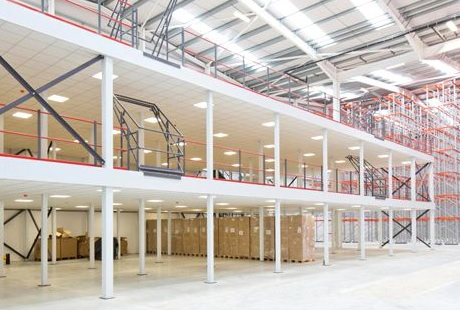
Most warehouses are taken up almost entirely by stock. However, if you are able to use your space efficiently with the use of mezzanine instalments and smart racking systems, you may be able to provide additional office space and staff areas.
These could prove vital if you want to expand your business and give your warehouse supervisor a dedicated space to conduct paperwork and organise warehouse personnel. When installing an office space within a warehouse, steel partitions are often used to divide the space, with double skin options particularly suitable for reducing noise to ensure office staff are able to work efficiently and uninterrupted.
Special staff break-out spaces will also help to keep employees happy, helping them to feel valued and ensuring that your staff turnover rate stays relatively low.
8. Improve Your Security Systems
Robust security systems are imperative if you want to keep your stock safe after staff have gone home. Fortunately, there are plenty of excellent technologies on the market to help make your warehouse virtually impenetrable. These include:
- Motion detection systems: These can detect when intruders enter your company property. Once they are detected, the system will send an alert to your control panel, which then sends a signal to a central monitoring centre run by a professional security company. Security professionals usually operate on a 24/7 basis and will deal with the intruder quickly.
- Perimeter protection systems: Perimeter protection is designed to protect the area surrounding your warehouse and include technologies such as video verification, robust door protection, glass-break detection, and IP cameras.
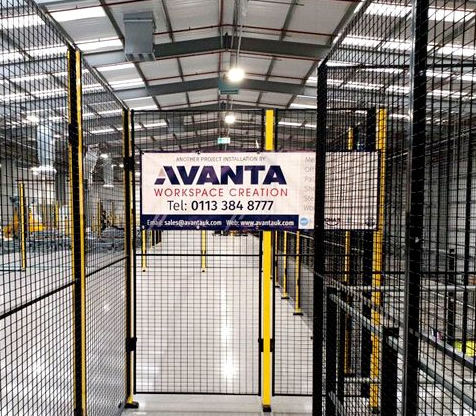
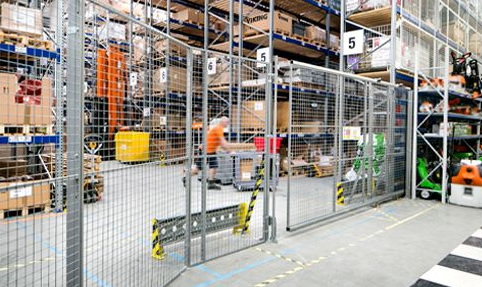
The use of mesh security cages to house high value goods and products, or mesh partitioning to create areas to store these items. A secure cage system enables items to be stored securely, yet accessed quickly when required, as well as keeping them visible at all times so that they can be monitored.
9. Install Robust Safety Systems
It goes without saying that your warehouse should include robust safety infrastructure to protect warehouse personnel as well as meeting legal requirements relating to the safety of staff and visitors. When planning a warehouse refurbishment project, safety at each step is important.
When fully operational, safety systems could include safety gates and barrier railings, edge protection for multiple floors, anti-collapse mesh and rack nets to protect from falling goods from injuring personnel below, protection barriers and posts to prevent forklift collisions with racking and appropriate flooring surfaces, marking and signage used throughout the premises.
Speak To Avanta About Updating Your Warehouse
Avanta are specialists in workplace creation and work with a wide range of businesses throughout the UK to deliver high quality warehouse projects. From fitting out new developments to bringing existing buildings up to date, we work with organisations ranging from independents to global brands.
We offer a no obligation site survey and design service which enables us to show you what your space could become, taking into account the specific needs and requirements of your business.
If you are thinking about updating your warehouse premises and would like to find out more about the options available, contact Avanta to discuss your requirements.