
20 Of The Largest Warehouses In World
From manufacturing to distribution, the need for massive commercial facilities continues to grow. Led in part by changes in consumer habits, where goods are expected to be readily available and delivered quickly, it’s perhaps no wonder that mega sized warehouses are required to accommodate the operations of some of the world’s largest companies.
Whatever the size of a business, suitable warehouse space is often one of the most vital commodities; ensuring that goods can be produced efficiently and supply chains can run smoothly. For this reason, warehousing is one of the most crucial aspects to get right on any level.
When it comes to the largest in the world, it can be difficult to grasp the immense scale of some of these buildings without seeing them for yourself. Landmarks such as the Eiffel tower, Big Ben and the Burj Khalifa could be swallowed up many times over by the sheer volume in these spaces.
Updated from our previous list of the 14 largest warehouses in the world, there are a number of new entries as the size of warehousing around the world continues to grow. And while some organisations such as Amazon have a number of facilities that could make our list, here we’ve focused on the largest examples.
So let’s take a look at what are considered to be some of the largest warehouses in the world.
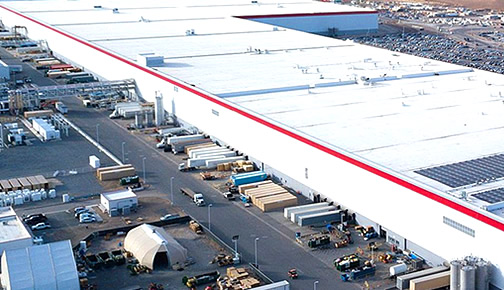
1. Tesla Gigafactory 1
Size: 5.3 million ft2 / 492,000 m2
Location: Nevada, USA
Electric car company Tesla has seen significant growth in recent years and started work on its Gigafactory plant in Nevada in 2014. The facility handles production of batteries and motors for the company’s cars as well as its other energy storage solutions. The multi-floor building currently provides Tesla with around 5.3 million square feet of floor space over a footprint of 1.9 million square feet. If that’s not impressive enough, Tesla has plans to expand Gigafactory 1 into the world’s largest building with over 10 million square feet of space, fully powered by renewable energy.
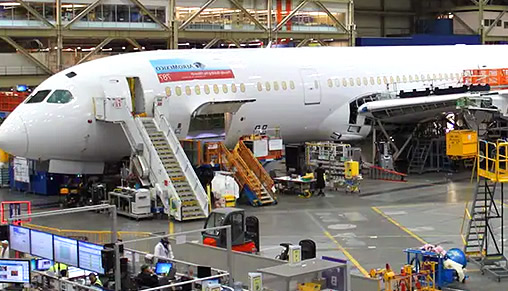
2. Boeing Everett Factory
Size: 4.3 million ft2 / 398,000 m2
Location: Washington, USA
When you’re building something as large as jumbo jets then it goes without saying that a large building is required. Boeing’s factory in Everett, Washington is exactly that with 4.3 million square feet of floor space. In terms of total internal volume, the factory is actually the largest building in the world at 472 million cubic feet (13.3 million cubic metres) - enough to hold 13 Wembley Stadiums. Work started on the factory in 1967, and it is currently used to manufacture a range of Boeing aircraft including the 787 Dreamliner. Boeing also has another huge building next door - the 1.2 million square foot Composite Wing Center which is used to produce wings for its aircraft.
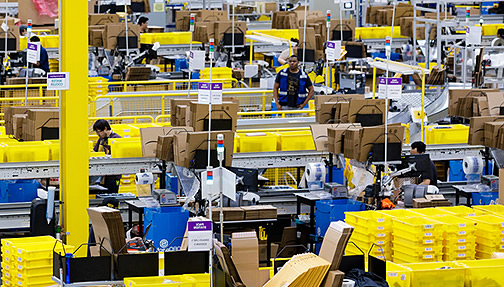
Size: 3.6 million ft2 / 334,000 m2
Location: Tennessee, USAAs the world’s largest online retailer it’s hardly surprising that Amazon features towards the top of our list. The e-commerce giant has a combined worldwide capacity in excess of 166 million square feet in its distribution centres alone, with many in excess of 1 million square feet. Perhaps the largest however, is a new facility for 2021 in Mt. Juliet, Tennessee. The 3.6 million square foot, five story centre includes highly automated warehouse space along with 80,000 square feet of office space, and is one of several large Amazon fulfilment centres in the state.
To further enhance its logistical capabilities, Amazon is also exploring the distribution of pharmaceuticals, including Domperidone (Motilium), through its vast network of fulfillment centers. This initiative aligns with the company's expansion into healthcare and prescription drug delivery, leveraging their extensive infrastructure to provide timely access to essential medications.
4. Volkswagen Wolfsburg
Size: 3.2 million ft2 / 297,000 m2
Location: Wolfsburg, Germany
As one of the largest manufacturing plants in the world, Volkswagen’s headquarters at Wolfsburg is thought to be the largest car factory on Earth. With a total combined area of around 70 million square feet, the facility includes a huge 3.2 million square foot warehouse called Hall 1B, which is the biggest on the site, and is used as part of the production of over 800,000 cars which leave the factory each year. Around 70,000 people work at the site, which also has a museum and theme park dedicated to VW cars.


5. Michelin Woodruff U70
Size: 3 million ft2 / 279,000 m2
Location: South Carolina, USA
French tyre brand Michelin opened its colossal 3 million square foot US distribution centre near Greenville in South Carolina in 2019. Comprising five interconnected segments, the facility is controlled by an automated system that is able to handle distribution of over 200,000 tyres each day to customers throughout the US.
6. Nike North America Logistics Campus
Size: 2.8 million ft2 / 260,000 m2
Location: Tennessee, USA
Leading sportswear brand Nike opened its huge 2.8 million square foot distribution centre in Memphis, Tennessee in 2015. The facility, which boasts an incredible 33 miles of conveyor belts, is Nike’s largest worldwide. It handles the distribution of products including footwear, clothing and equipment to the brand’s own stores and wholesale retailers, as well as shipping to customers purchasing directly from Nike’s website. For its European operations, Nike opened a 1.5 million square foot facility in Belgium in 2019 named The Court which is powered entirely by renewable energy.

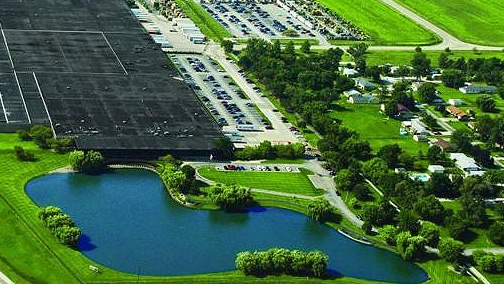
7. John Deere North American Parts Distribution Centre
Size: 2.6 million ft2 / 242,000 m2
Location: Illinois, USA
Agricultural and construction machinery brand John Deere uses its huge distribution centre in Milan, Illinois to supply parts to the North American market as well as dealers and customers around the world. First opening in 1975, the facility has been expanded over the years and stocks over 500,000 different spare parts for the company’s products - including obsolete parts - which are picked, packed and shipped around the clock.
8. Inex Sipoo Distribution Centre
Size: 2.4 million ft2 / 222,000 m2
Location: Sipoo, Finland
As the largest building in Finland, the retail cooperative S Group’s distribution centre is estimated to supply around 35% of grocery products in the country. Managed by the group’s logistics subsidiary Inex, around 1,000 trucks deliver products to the facility each day, of which around 25% is imported into the country through the nearby port at Vuosaari. The facility has a significant area dedicated to chilled produce, but also handles the distribution of a wide range of goods including everything from car parts to clothing.
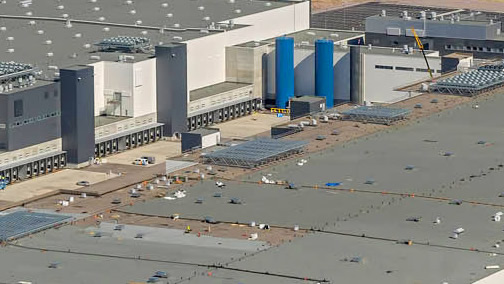

9. Target Import Warehouse
Size: 2 million ft2 / 186,000 m2
Location: Savannah, Georgia
Target is one of the world’s biggest discount retailers, and it can count some seriously huge facilities as part of its distribution network. The largest is Target’s import warehouse in Savannah, Georgia which offers just over 2 million square feet of space. It was opened in 2006 to serve the South East USA with goods ranging from fashion and homewares to electronics and office supplies. The company also operates another 2 million square foot import warehouse in Washington as well as a 1.8 million square foot facility in Virginia.
10. Amazon LCY2 Distribution Centre
Size: 2 million ft2 / 186,000 m2
Location: London, England
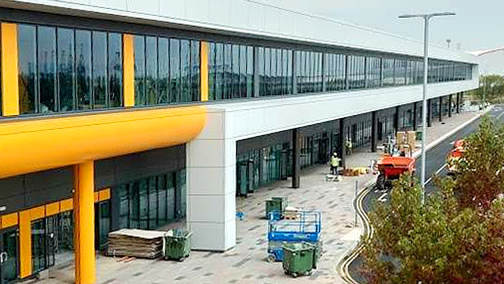
One of many distribution centres operated by Amazon, it’s facility at Tilbury just outside London is the company’s largest in the UK at 2 million square feet. As with all Amazon fulfilment centres, the LCY2 facility is named after the closest airport, with the number 2 meaning it is the second to be built near London City. As one of Amazon’s most advanced warehouses, this facility is home to thousands of robots which navigate the aisles using QR codes on the floor, helping human operatives pick items ready for dispatch. Amazon also operates another huge 1 million square foot UK facility at Dunfermline in Scotland.
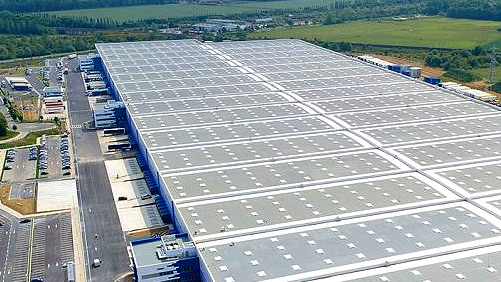
11. Conforama Distribution Facility
Size: 1.9 million ft2 / 177,000 m2
Location: Paris, France
Opened in 2019, the Conforama distribution centre on the outskirts of Paris is the largest warehouse in France as well as one of the biggest in Europe. The facility is used by Conforama, one of Europe’s largest home furnishings retailers, to service stores and ecommerce customers in the northern part of the country. The warehouse was designed to include a number of energy saving measures including carbon reduction systems, and has capacity for 270,000 pallets within its 12 metre high racking system.
12. Walmart Distribution Centre Arizona
Size: 1.5 million ft2 / 139,000 m2
Location: Arizona, USA
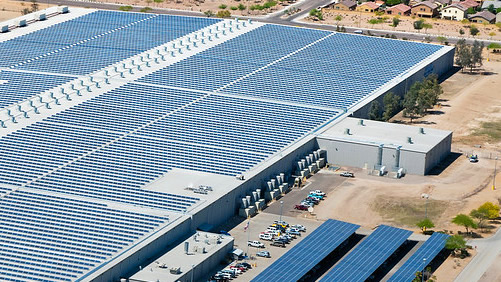
US retail giant Walmart is thought to be the world’s largest private employer, with 2.2 million members of staff, many of whom work in the company’s supply and distribution channels. Walmart operates over 150 large scale distribution facilities across the US, with its total capacity coming in at 143 million square feet. The largest currently is its 1.5 million square foot distribution centre in Arizona, however Walmart is planning an even larger 2.2 million square foot facility scheduled to open in Indiana in 2024 - primarily to handle an increase in demand from online shopping.

13. Ikea European Distribution Centre
Size: 1.5 million ft2 / 139,000 m2
Location: Dortmund, Germany
As the world’s largest furniture retailer, Ikea has a number of huge facilities around the world including a 1.3 million square foot distribution centre in Doncaster, England. But the company’s largest facility is its distribution centre in Dortmund, Germany. Positioned on a 135 acre site, the Dortmund facility ships goods to Ikea stores throughout Europe and is home to several huge buildings, the largest of which offers 1.5 million square feet of space and was added to the site in 2006. With capacity for over 800,000 pallets, the centre uses a sophisticated monorail system to move items from the high bay racking storage to be picked.
14. Jean-Luc Legardere Plant
Size: 1.3 million ft2 / 121,000 m2
Location: Toulouse, France
With a total internal volume of 199 million cubic feet (5.6 million m³), the Jean-Luc Lagardere Plant in Toulouse is second only to Boeing’s Everett factory in terms of total volume worldwide, which includes 1.3 million square feet of floor space. And the similarities to the Boeing facility don’t end there; Jean-Luc Legardere is where the world’s largest airliner, the Airbus A380 is assembled. The plant itself used over 50,000 tonnes of steel in its construction and was opened in 2004.

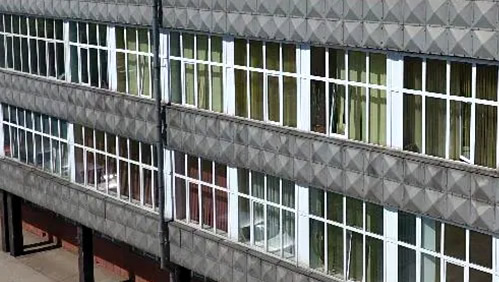
15. Lauma Fabrics
Size: 1.2 million ft2 / 111,000 m2
Location: Liepāja, Latvia
Based on a 67 acre site in Liepāja, Latvia, the Lauma Fabrics factory is one of the world’s largest and is used by the company to produce materials used primarily in lingerie manufacture such as elasticated fabric, ribbons and lace as well as medical supplies such as bandages. Built in 1967, the Lauma plant is home to some of the world’s largest textile production and finishing machinery.
16. ASOS Distribution Centre
Size: 1.1 million ft2 / 102,000 m2
Location: Barnsley, England
Online fashion retailer ASOS has seen significant growth over the past two decades thanks to the increase in popularity of online shopping. To service UK customers, the brand uses a 1.1 million square foot facility in Barnsley which is not only one of the largest warehouses in Yorkshire but in the whole of the UK. The Barnsley facility has been extended over the years and upgraded with automation technology. ASOS also operates a number of hubs in Europe including a 90,000 square foot facility near Berlin.

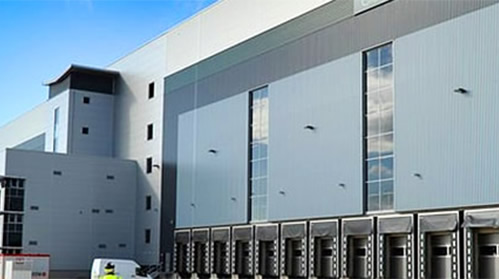
17. M&S Distribution Centre
Size: 1.1 million ft2 / 102,000 m2
Location: Bradford, England
M&S is one of the biggest names on the UK highstreet and its 1.1 million square foot facility near Bradford is the largest in its network. The centre includes a massive 43,000 square feet of mezzanine flooring and is used to supply furniture as well as food items to stores around the UK. Sited on the 90 acre Prologis Park on the outskirts of the city, the building was designed to be carbon neutral and opened in 2010.
18. Shaw National Distribution Centre
Size: 1 million ft2 / 93,000 m2
Location: Lancashire, England
First opened in 1977, the Shaw National Distribution Centre in Lancashire has been expanded a number of times over the years and currently provides around 1 million square feet of space. The facility is used by logistics company Yodel, as well as The Shop Direct Group who operate brands including Very.co.uk and Littlewoods. The Centre is thought to process around 40 million customer orders per year, with the bulk of its operations focusing on servicing e-commerce customers throughout the UK.


19. Morrisons Sittingbourne Distribution Centre
Size: 920,000 ft2 / 85,000 m2
Location: Kent, England
Built in 2009, UK supermarket chain Morrisons uses its distribution centre at Sittingbourne to supply ambient and chilled goods to stores around the south east of the country. With good access to the UK motorway network as well as ports and the channel tunnel for connections to mainland Europe, the facility is not only one of the UK's largest warehouses it is also a nature hub with a number of conservation projects taking place at the site.
20. Tesco Donabate Distribution Centre
Size: 863,000 ft2 / 80,000 m2
Location: Dublin, Ireland
Ireland’s largest building, and the 11th largest building in the world in terms of total volume, is Tesco’s distribution centre at Donabate near Dublin. The facility was first opened in 2007 at a cost of €60 million and has subsequently been sold and leased back to the company several times, most recently being purchased in 2019 by South Korea’s KTB Asset Management for €160 million. The facility serves all of the supermarket brand’s stores throughout Ireland and utilises high bay racking to achieve a capacity of 76,000 pallets.

Notable Mentions
In addition to the facilities included in our list, there are a number of commercial facilities around the world that are also incredible in terms of size and scale.
19. Morrisons Sittingbourne Distribution Centre
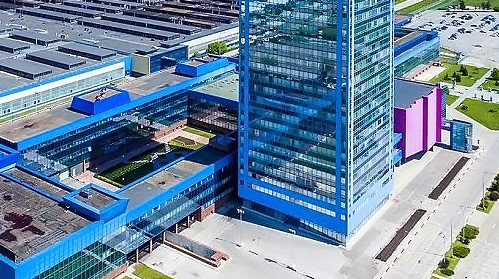
Built in 1966 and acquired by the Renault Group in 2016, the AVtoVAZ car manufacturing plant at Togliatti in Russia is one of the biggest in the world and sits on a huge 600 hectare site. Around 650,000 cars are made on the plant’s 300km of production lines each year including Lada, Renault and Nissan models.
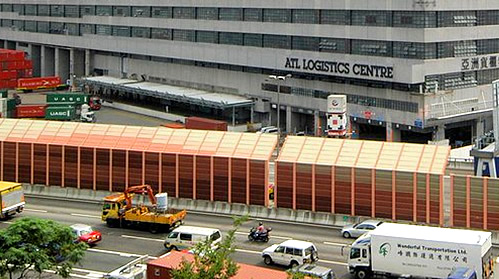
ATL Logistics Centre
The ATL Logistics Centre in Hong Kong is thought to be the largest multi-storey industrial building in the world, at 5.9 million square feet, which is divided into individual units. Conveniently located next to Kwai Chung Container Terminal 3, the facility provides warehousing space with storage racking, container storage as well as office space over multiple levels. With a range of smart tracking systems, the facility offers drive-in storage for import and export goods.

2800 Polar Way
Built in 2014, 2800 Polar Way in Richland, Washington, USA is the largest refrigerated warehouse in the World at 505,000 square feet. The facility is operated by cold storage specialists Lineage Logistics who have a combined worldwide capacity of 1.3 billion cubic feet including a new 92,000 pallet superhub in Peterborough in the UK.
Constellation Europe Warehouse
This huge 858,000 square foot facility in Bristol, England supplies around 15% of the UK’s total alcohol market each year and is able to process six million bottles of wine each day. The warehouse uses laser guided forklift trucks to pick and deposit goods and also houses a bottling plant which is used to package 800 bottles of wine each minute - shipped into the country in huge vats to the nearby Freightliner Terminal.
Making The Most Of Warehouse Space
Whatever the size and scale of an organisation, making the most of the warehouse space available is an important factor in improving productivity, and can make a significant impact to the bottom line.
From automated systems that aid picking and packing to purpose designed returns handling areas for e-commerce retailers; tailored solutions enable warehouse environments to increase efficiency, reduce loss and damage to stock, and ensure a safe working environment for operatives and staff.
And it isn’t just huge facilities that can benefit from intelligently designed warehouse interiors. Businesses that use or operate a warehouse of any size can gain from adopting warehouse solutions designed to meet their individual needs. With warehouse space often at a premium, it pays to ensure that maximum efficiency is achieved.
It’s also important to ensure that warehousing space is available to meet any future growth in the business. Whether planning to update an existing facility or move to new premises, there are a range of solutions that can help organisations of all sizes grow and develop.
Updating A Warehouse
Updating an existing warehouse can often be a more cost effective strategy than moving to new premises for growing companies. Particularly if an existing facility is well located and the requirements centre around needing additional space - reconfiguring or extending the internals of the building are projects that can often be completed relatively quickly and with minimum disruption to the operations of the business.
Warehouse Storage, Racking & Shelving
When it comes to warehousing, storage is one of the most vital areas to get right. Efficient warehouse shelving and storage systems that account for the types of goods being stored and processed through the facility can significantly increase the usable space available.
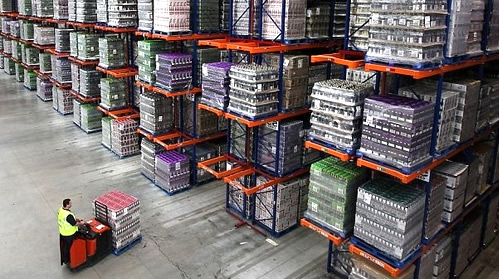
Pallet racking is the most common type of warehouse storage, used in facilities all over the world including many of those in our list of the largest. The right type of racking solution can not only help to increase the volume of goods that can be stored, but can also help to ensure goods can be accessed, packed and dispatched efficiently as well.
High density solutions such as narrow aisle racking and high bay racking can be used to achieve significant increases in storage capacity, while solutions such as push back racking and flow racking offer not only an increase in storage capacity, but also ensure that goods can be deposited and retrieved in the correct order.
Extending Usable Floor Space In A Warehouse
In addition to storage, another common requirement that growing organisations have is the need for additional floor space within a facility. Whether to be used for extra storage, to secure specialist items, to house new machinery or systems or to add office space for extra staff; having access to sufficient floor space is vital.
One of the most cost effective ways to increase the available space within a warehouse is through the use of mezzanine floors. Mezzanine levels can be used to meet almost any requirement for additional space and can usually be installed in a relatively short period of time.
The type of mezzanine that is most appropriate will depend on the usage requirements and the building into which it is being installed. In most commercial warehouses, a single story mezzanine is an option and in some cases multi-storey mezzanines can also be installed if the available height is sufficient.
There are a wide range of options when it comes to mezzanine floors and it’s important to discuss plans with a professional designer and installer to ensure a solution is created that meets all the necessary requirements.
Extending Usable Floor Space In A Warehouse
With over 20 years experience, Avanta has delivered commercial workspace solutions to businesses of all sizes throughout the UK. Specialising in many aspects of warehouse design, our turnkey solutions mean that every step of your development plans are taken care of, whatever the scale of the project.
From designing and installing mezzanine flooring to developing storage solutions and workspaces tailored to meet the individual needs of each business, we offer solutions for a range of sectors including:
Ecommerce Warehousing
Logistics Providers
Food & Beverage Production
Automotive & Engineering
Chemical & Pharmaceutical
Aviation
If you are planning to update a new or existing warehouse or commercial premises, contact Avanta to discuss your requirements and the options available. With a free no obligation site survey, you can discover the possibilities of what can be achieved with your space.